
Written by ICT-certified naturalist guides who walk this park every week. Hours and fees checked against SINAC on 25 September 2026.
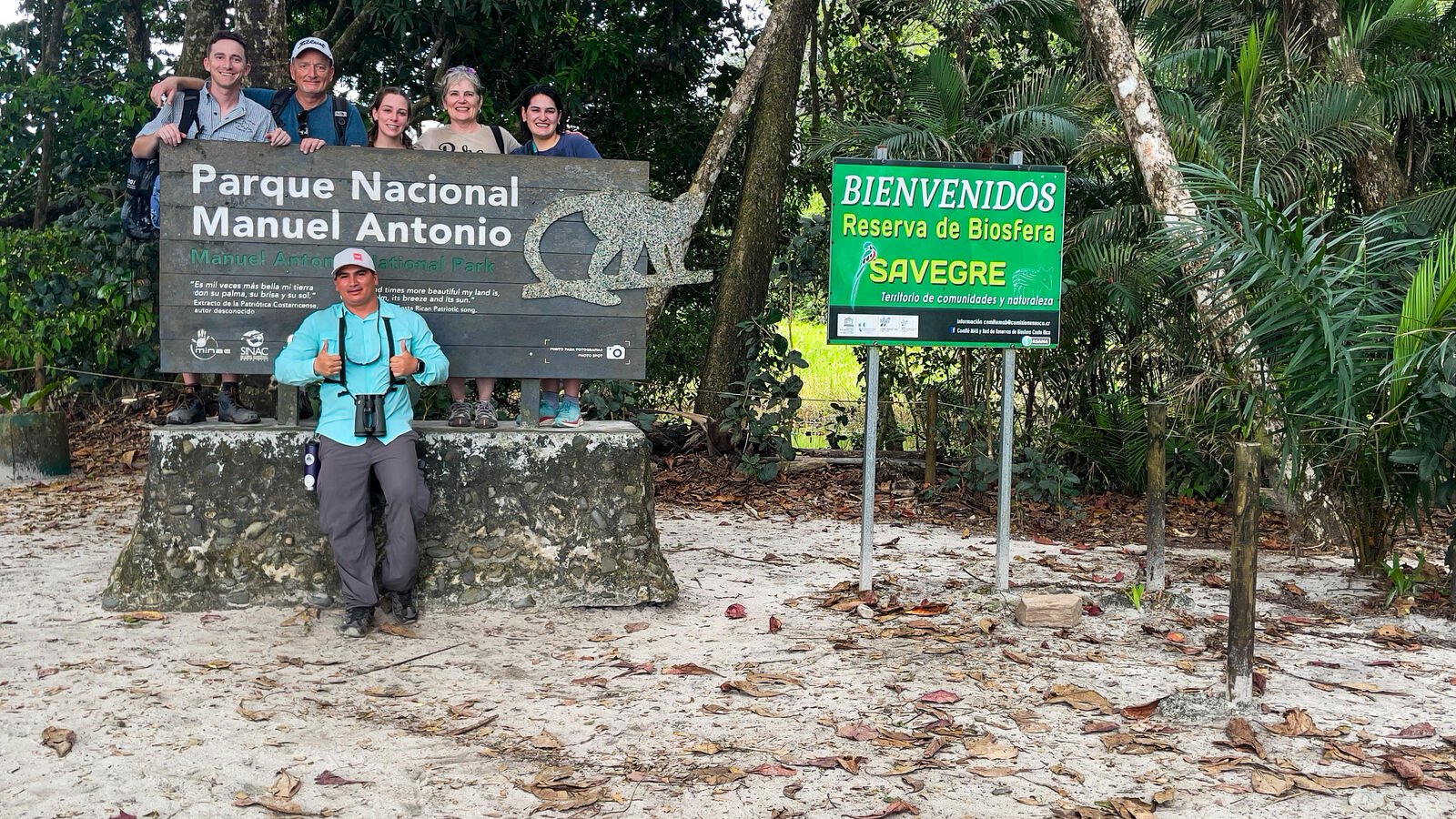
Manuel Antonio National Park
Park hours: Wednesday to Monday, 7:00 a.m. – 3:00 p.m. Closed every Tuesday.
Status follows the regular Costa Rica schedule; it is not a live alert for exceptional closures.
December 2026Closed: Tue 1, 8, 15, 22, 29
January 2027Closed: Tue 5, 12, 19, 26
Dec 24, 25, 31 and Jan 1 fall on Thursday/Friday and fall within the regular opening schedule. Check SINAC for any special closure notices before your visit.
| Visitor | SINAC fee |
|---|---|
| Non-resident adult 13+ | $18.50 per adult (SINAC portal, tax included) |
| Non-resident child 2–12 | $5 + 13% VAT ≈ $5.65 |
| Under 2 | Free |
| Costa Rican resident adult | ₡1,600 + 13% VAT = ₡1,808 Over 65 free with cédula |
| Resident child 6–12 | ₡500 + 13% VAT = ₡565 |
Source: SINAC, Área de Conservación Pacífico Central. Fees are set by decree and the portal shows the final total.
Want the ticket, transport and a certified guide handled in one message? Premium ($65) and VIP Private ($100) include the park entrance. Classic Group is $30 with your own ticket.
Short answer: Manuel Antonio National Park, Costa Rica is the country’s most visited national park and its smallest coastal one — a 7 km stretch of rainforest that runs straight down to three white-sand beaches on the central Pacific, 7 kilometres east of Quepos. It is open Wednesday to Monday, 7:00 a.m. to 3:00 p.m., closed every Tuesday, tickets are sold online only through SINAC, and roughly eight kilometres of trail can be walked in a morning. Everything below answers a question a real traveller asked us or asked Google before coming.
We are Wakoo Tours, an ICT-certified guiding team based in Quepos. We walk this park most mornings of the week. This page is the reference we wish existed when someone lands on a flight in December and has one day for Manuel Antonio: the hours, the money, the trails, the animals, and the traps — with the source named next to every number, because the numbers that circulate about this park disagree with each other more than you would expect.
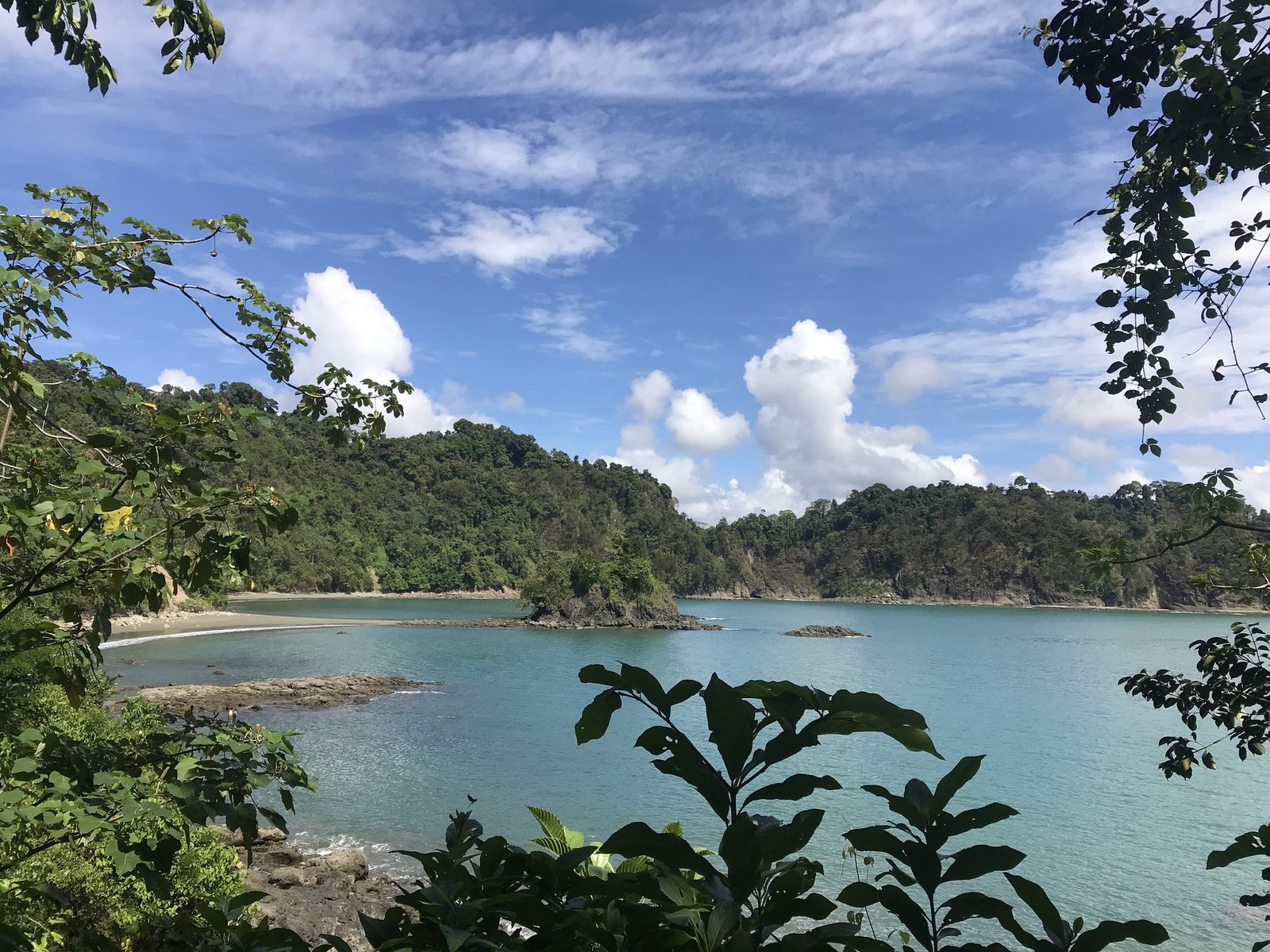
Manuel Antonio National Park is a protected coastal rainforest on Costa Rica’s central Pacific coast, in the canton of Quepos, province of Puntarenas, managed by SINAC (Sistema Nacional de Áreas de Conservación), the national park authority. What makes it unusual is not size — it is one of the smallest parks in the country — but density: primary and secondary rainforest, mangrove edges and beach vegetation compressed into a few square kilometres, with one public entrance and a handful of well-marked trails.
That compression is the whole point for a visitor. In most Costa Rican parks you drive an hour and walk two to reach wildlife. Here the main trail is flat, wide and shaded, and the animals — three-toed and two-toed sloths, white-faced capuchins, howler monkeys, agoutis, iguanas, and on good mornings Central American squirrel monkeys — live along the same corridor the visitors walk. Nothing is guaranteed on any given day, but the odds per hour of walking are among the best in the country.
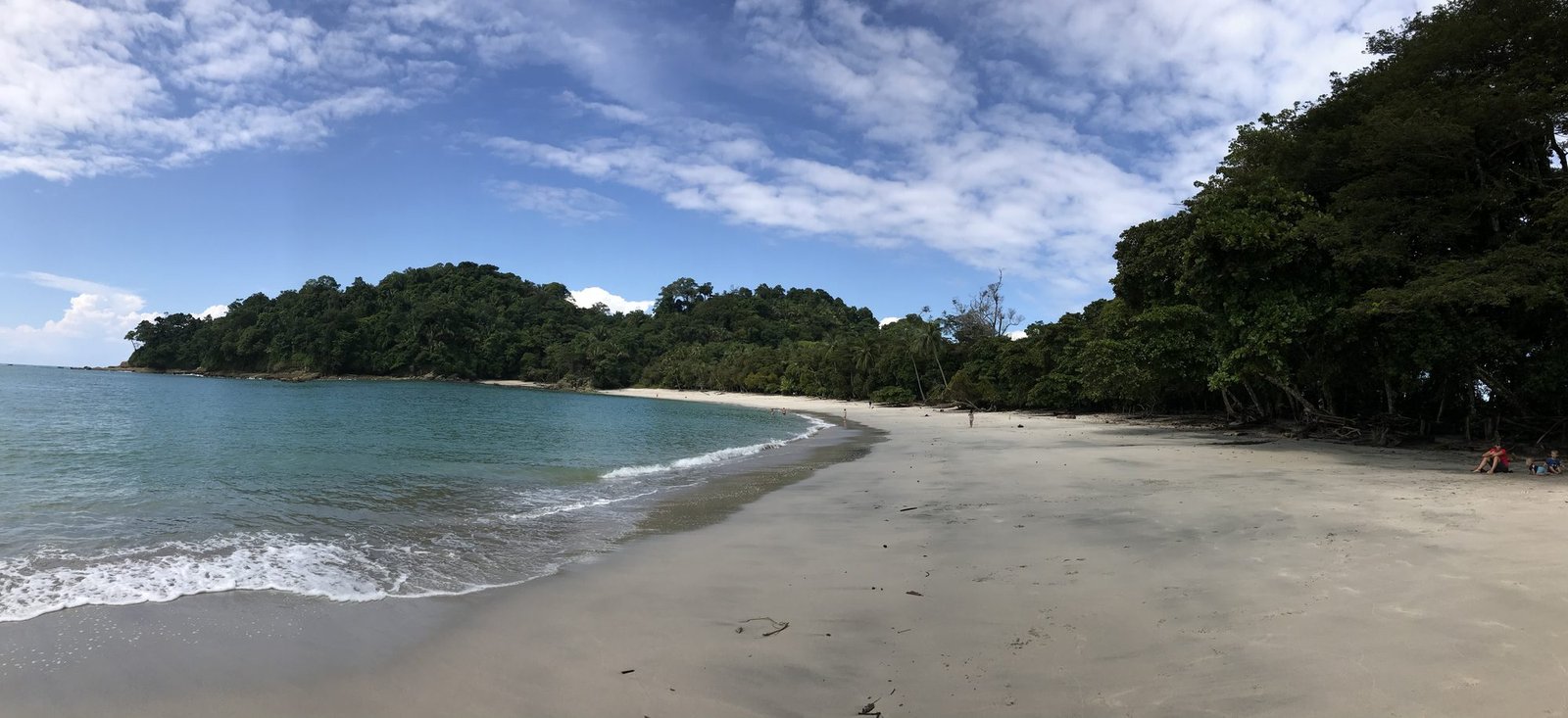
The park is also a beach destination. Playa Manuel Antonio, the protected cove inside the park, is one of the few Costa Rican beaches where swimming is calm and the forest starts a few metres behind the sand. Most people come for both halves and underestimate how much of the day they need.
The park entrance sits at the end of the Quepos–Manuel Antonio road, about 7 kilometres east of downtown Quepos (SINAC), on the central Pacific coast. Costa Rica does not use street numbers, so the practical address is: Manuel Antonio National Park main entrance, end of the road into Manuel Antonio, Quepos, Puntarenas.
The GPS point that matters is the official parking lot next to the entrance: 9.39149, -84.14567. Set your navigation to that, not to “Manuel Antonio beach” — the beach entrance is not the park entrance, and that single mistake costs people the first hour of their morning. Our full breakdown of the layout is on the Manuel Antonio National Park map page.
Yes, if you arrive at opening and treat it as a wildlife walk rather than a beach day; it is the most reliable place in Costa Rica to see sloths and monkeys within a two-hour walk on flat ground. The honest counterweight: it is the country’s most visited park, it works with a daily visitor limit, and by late morning in high season the main trail feels like a queue. Nearly every disappointed review we have read describes the same visit — arriving at 11 a.m., walking without a guide, seeing leaves.
If your trip has one day for a national park and you want the highest chance of wildlife per hour walked, this is the one. If you want solitude, it is not. For every path and every beach inside it — distance, difficulty and a 3-hour route — see our full guide to the park trails and beaches.
The park is open Wednesday to Monday, 7:00 a.m. to 3:00 p.m., and closed every Tuesday. That Tuesday closure is SINAC’s rest day for the trails and it is absolute — there is no exception for holidays or high season.
One warning about the closing time: SINAC’s official page gives 3:00 p.m., while several large ticket and travel sites still publish 4:00 p.m. Plan around 3:00 p.m., the figure the park authority itself publishes, so you are not on the far beach when rangers start clearing trails. We keep a live page for this single question: is Manuel Antonio National Park open today.
Nine: December 1, 8, 15, 22 and 29, 2026, and January 5, 12, 19 and 26, 2027. Across those two months there are 62 calendar days and 53 of them are open days.
Christmas Day and New Year’s Day are not a problem this season: December 25, 2026 and January 1, 2027 both fall on a Friday, so the normal Wednesday-to-Monday schedule applies. SINAC does not publish a separate holiday timetable (checked September 21, 2026). If your only free day is one of those nine Tuesdays, the national park is out, but the night tour and the Damas Island mangrove tour both run on Tuesdays.
The entrance fee is set by SINAC and changes by decree, so the only trustworthy figure is the one shown on SINAC’s own ticket site on the day you buy — we deliberately do not publish a number here, because the outdated prices repeated across travel blogs are one of the most common sources of confusion at the gate. Foreign adults, foreign children and Costa Rican residents pay different rates, and residents need their cédula at the control.
What we can tell you precisely is what a tour costs, because that is our own price: the Classic Group guided tour is $30 per person, Premium $65, Classic Private $69 and VIP Private $100. Children aged 3–12 pay $10 less on every option. The park ticket is included in Premium and VIP and not included in Classic Group or Classic Private — on those two you buy your own ticket online beforehand. The full line-by-line comparison is in our Manuel Antonio tour cost guide.
Online, and only through SINAC’s official ticket system — there is no ticket window at the entrance that sells you a same-day entry when the day is full. You buy for a specific date, you present the ticket plus your passport or ID at the control, and the name on the ticket has to match.
This is the single most expensive mistake a visitor can make here: arriving at the gate without a ticket on a December morning and being turned away. Anyone selling you a “ticket” in the parking lot or on the road into Manuel Antonio is not selling you a park ticket.
SINAC opens the calendar about two months before the date. That means Christmas-week tickets become available around October 25–28 for the following Christmas, and they go quickly — the last two weeks of December are the busiest of the year in Manuel Antonio and the park runs a daily visitor cap.
The planning error we see most: travellers book flights in August, try to buy a December 28 ticket in September, find the calendar closed, and conclude the park is sold out. It is not — it simply has not opened yet. Put a reminder on the date two months ahead. Our December 2026 – January 2027 planning page tracks the window day by day.
Three things, in order of how well they work. First, check again the next morning: cancellations return to the system and the calendar is not static. Second, move your park day by one — if you have three nights in Manuel Antonio, the difference between Thursday and Friday is nothing to you and everything to availability. Third, if the date cannot move, spend that day on something outside the park boundary: the Damas Island mangroves, the night walk on private reserve land, or birdwatching at Esquipulas, none of which depend on a SINAC ticket.
What does not work is showing up hoping. The cap is enforced at the control.
It is 157 km (97 miles) from San José by SINAC’s figure; My Tan Feet measures 156 km from SJO airport. The two sources are within a kilometre of each other, which is as much agreement as you will find on any Costa Rican distance. The drive is about 3 hours with no traffic and no stops; in practice plan 3 to 4.5 hours.
By car: Route 27 west toward Caldera, then Route 34 (Costanera Sur) south along the coast to Quepos, then up the hill to Manuel Antonio. Route 27 has toll booths, so carry colones. The road is paved the whole way and a regular car is enough for the park itself, though an SUV helps if your hotel sits up a steep drive.
By bus: Tracopa runs direct services from its downtown San José terminal to Quepos and Manuel Antonio — about 4.5 hours, roughly ¢5,510 (about $11) one way, per My Tan Feet. By shuttle: shared shuttles run about $59 to $77 per adult one way, private shuttles around $220 one way for 1 to 5 people (My Tan Feet, 2026), hotel door to hotel door. By air: Sansa and Green Airways fly SJO to Quepos (XQP) in about 20 minutes, around $150 one way per person. Every option is compared in our transport guide.
Park at Chalo’s lot, the official parking 75 metres from the park entrance, with 360° security; the fee is ¢5,000 or $10 and it is not included in any tour. If the lot is full you may be asked to leave your keys so cars can be shuffled — that is normal there, not a warning sign.
The scam works like this: on the road down into Manuel Antonio, men in reflective vests wave you into a “parking” well before the entrance, sometimes claiming the official lot is full. It is often not full, the vest means nothing, and you end up a long hot walk away having paid more. Drive to the GPS point (9.39149, -84.14567) and decide for yourself when you can see the lot.
One wide main trail runs inland from the ticket control, and four walking trails branch off it — roughly 8 kilometres of trail in total, about five hours if you walk all of it. The main trail is flat, shaded and easy; the branches climb. There is one public entrance and no back gate, so every route starts and ends at the same point.
The Perezoso (Sloth) trail is the flat, wide corridor where most sloth sightings happen. The Mirador climbs to a viewpoint over Punta Catedral and the coast. The Catarata trail is short and steep. The Punta Catedral loop wraps the headland between the two main beaches. The map page lays out which to walk first when you only have three hours.
Because SINAC does not publish a table of trail distances — we checked again on September 25, 2026. Every number in circulation comes from someone’s GPS track, which is why two guidebooks can give you two different lengths for the same path.
Here are the numbers with the source attached, which is the only honest way to give them: AllTrails records the Perezoso trail at 0.9 miles; My Tan Feet measures the Mirador trail at 1.3 km and the Catarata trail at 600 metres. Treat them as orders of magnitude, not survey data. What matters more than distance here is heat and stopping time: a 900-metre trail with a guide and a scope takes an hour, and should.
About five hours to cover all eight kilometres of trail without hurrying, which is more than most visitors have and more than most want in coastal heat. A realistic first visit is three to four hours: main trail in, one branch, the beaches, back out.
Our guided walks run two hours on the Classic options and two to four on Premium, and that is deliberate. The wildlife window is the first hours after 7:00 a.m.; after that you are mostly walking, not seeing. Many guests do the guided walk in the morning and then stay on in the park on their own ticket for the beach.
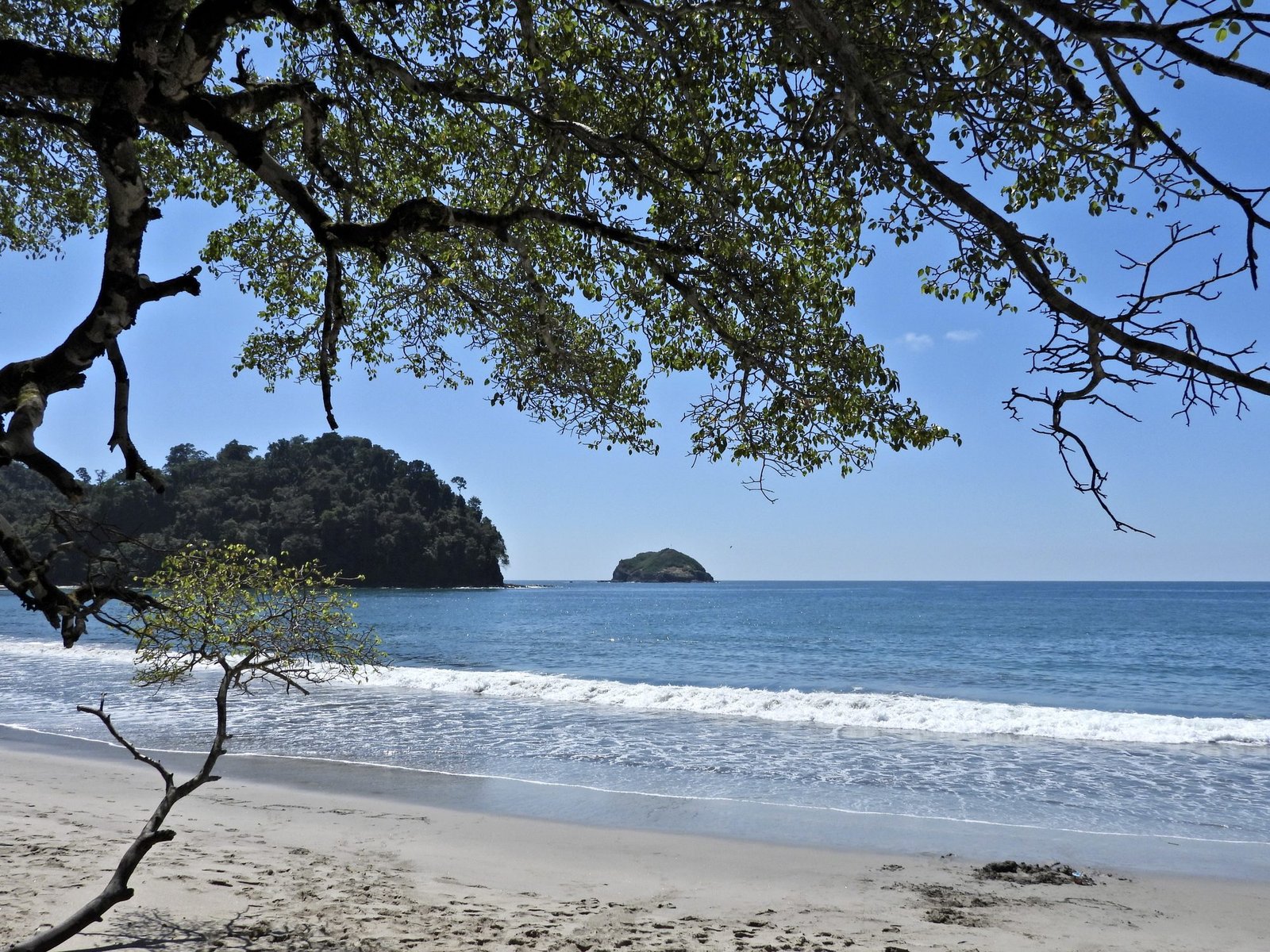
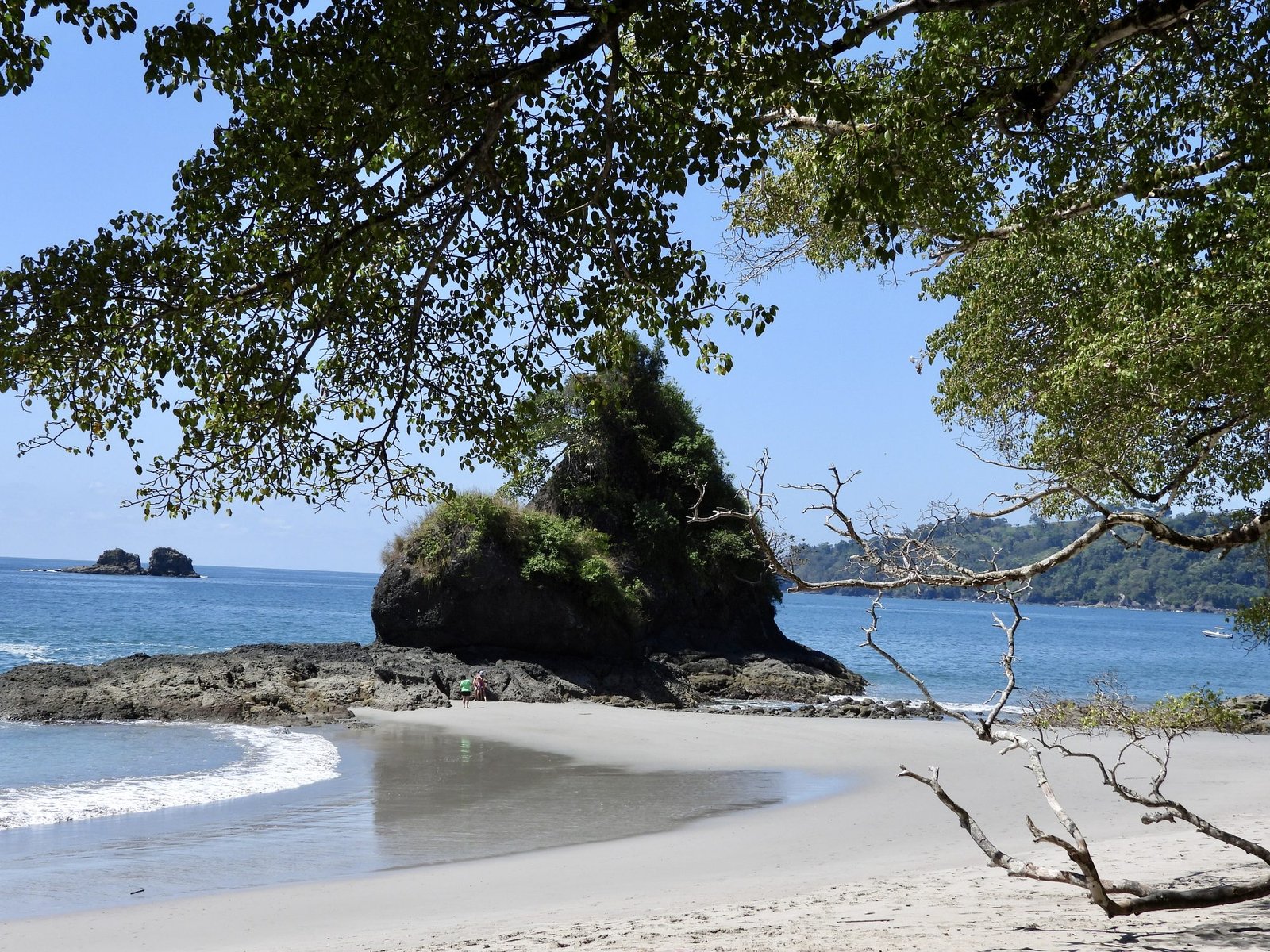
Playa Manuel Antonio, the sheltered cove beside Punta Catedral, is the main one — calm, shallow and the reason families come. Playa Espadilla Sur runs along the other side of the tombolo inside the park. Playa Gemelas sits further along the coast within the boundary.
One distinction worth having clear before you arrive: Playa Espadilla (without “Sur”) is the long public beach outside the park, free to enter, with rip currents that are a genuine hazard and no lifeguard for most of its length. Playa Espadilla Sur, inside the park, is a different beach. Travellers mix them up constantly. If you want the calm swim, it is Playa Manuel Antonio, inside.
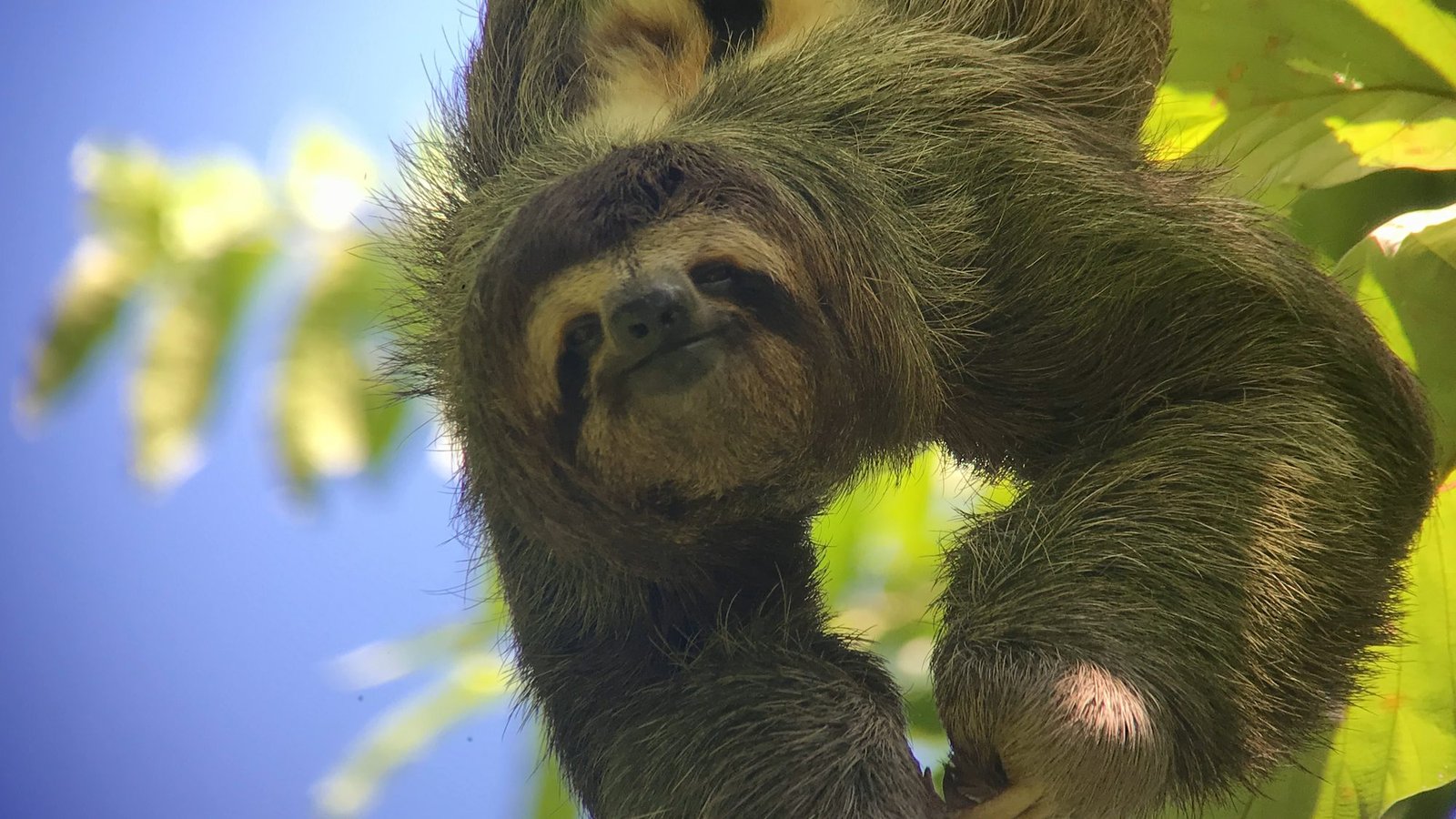
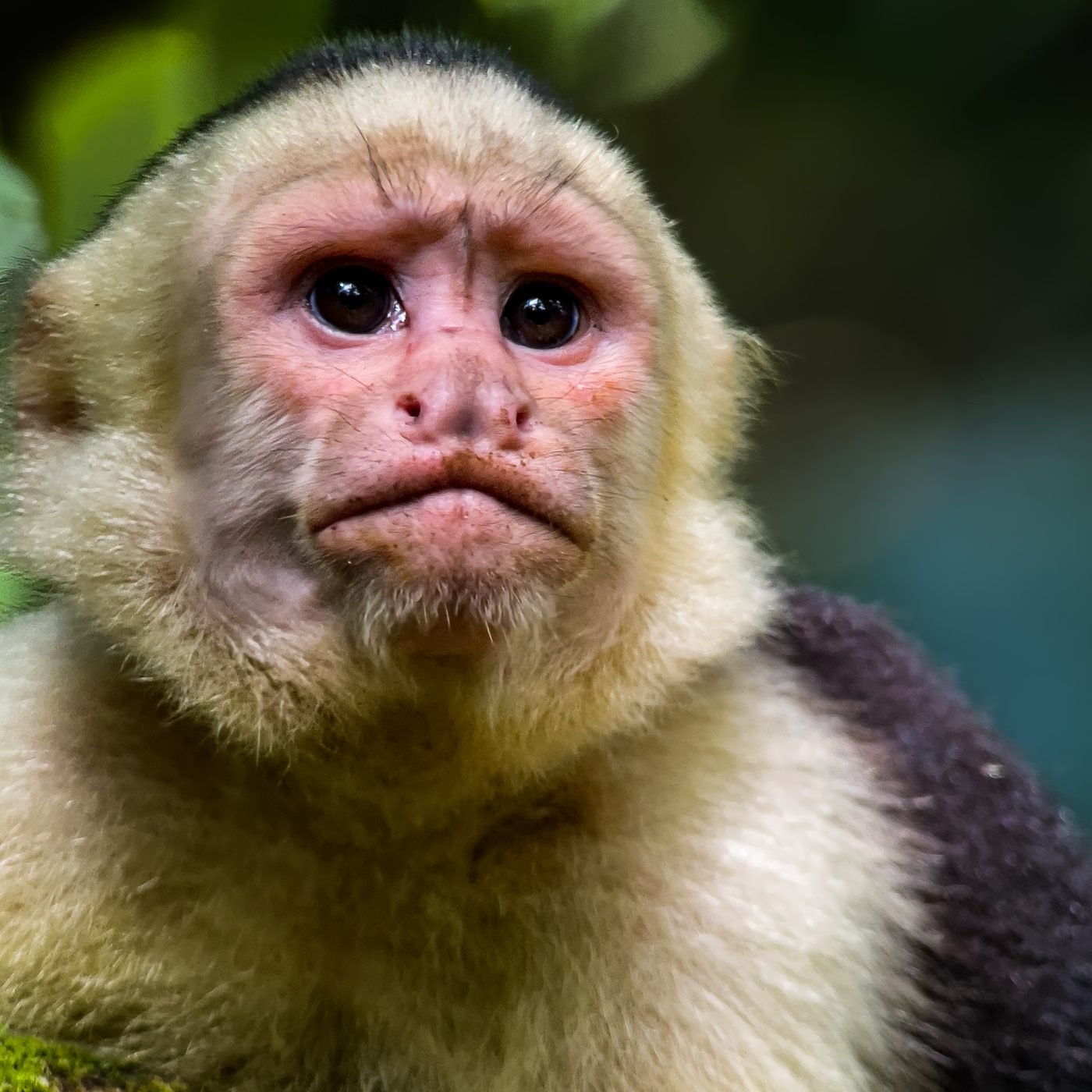
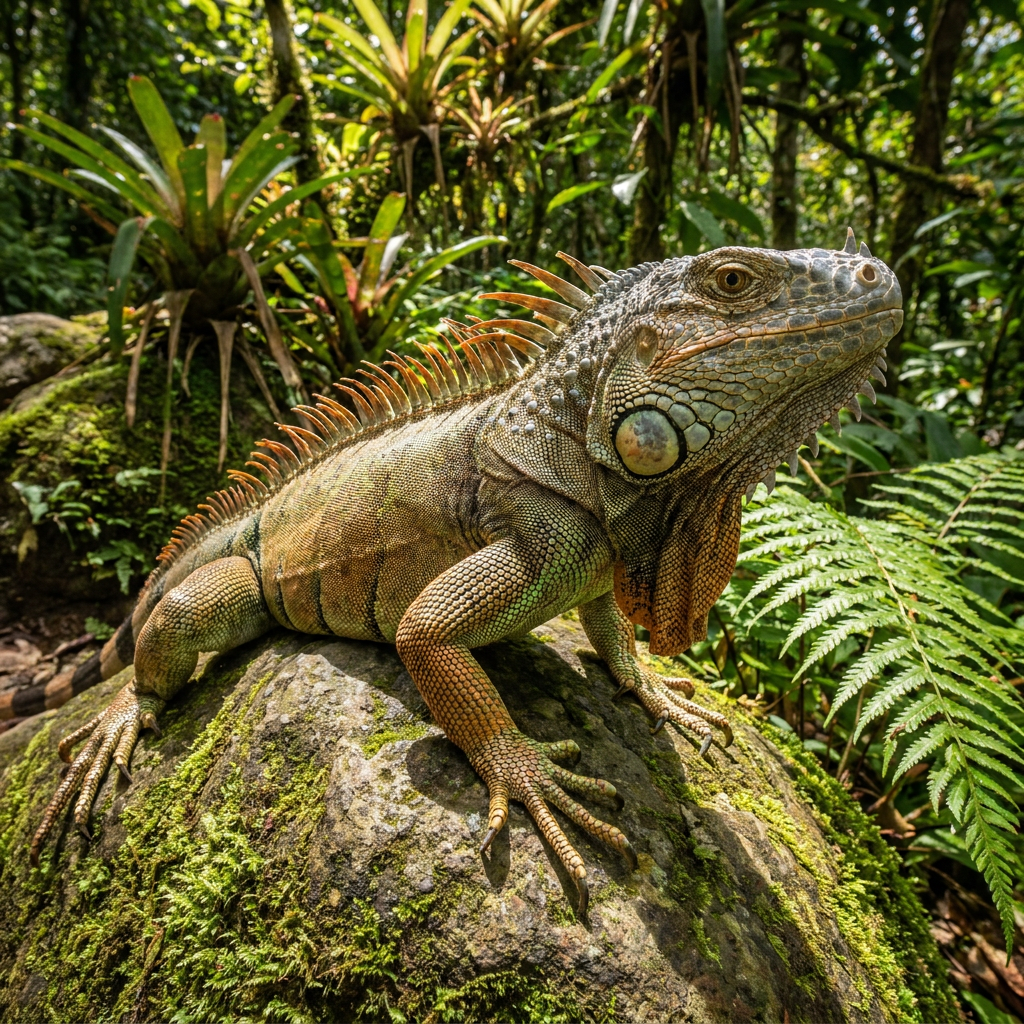
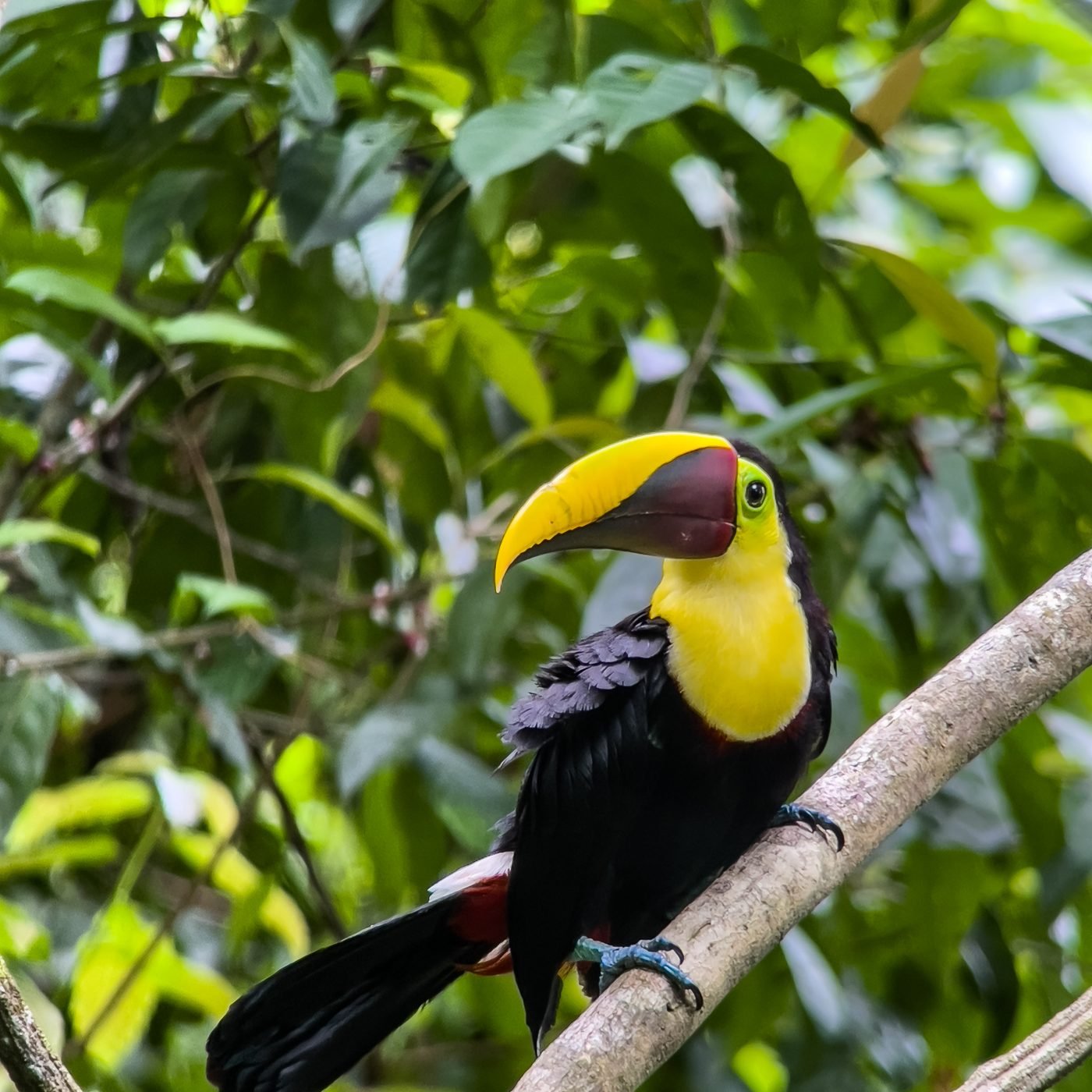
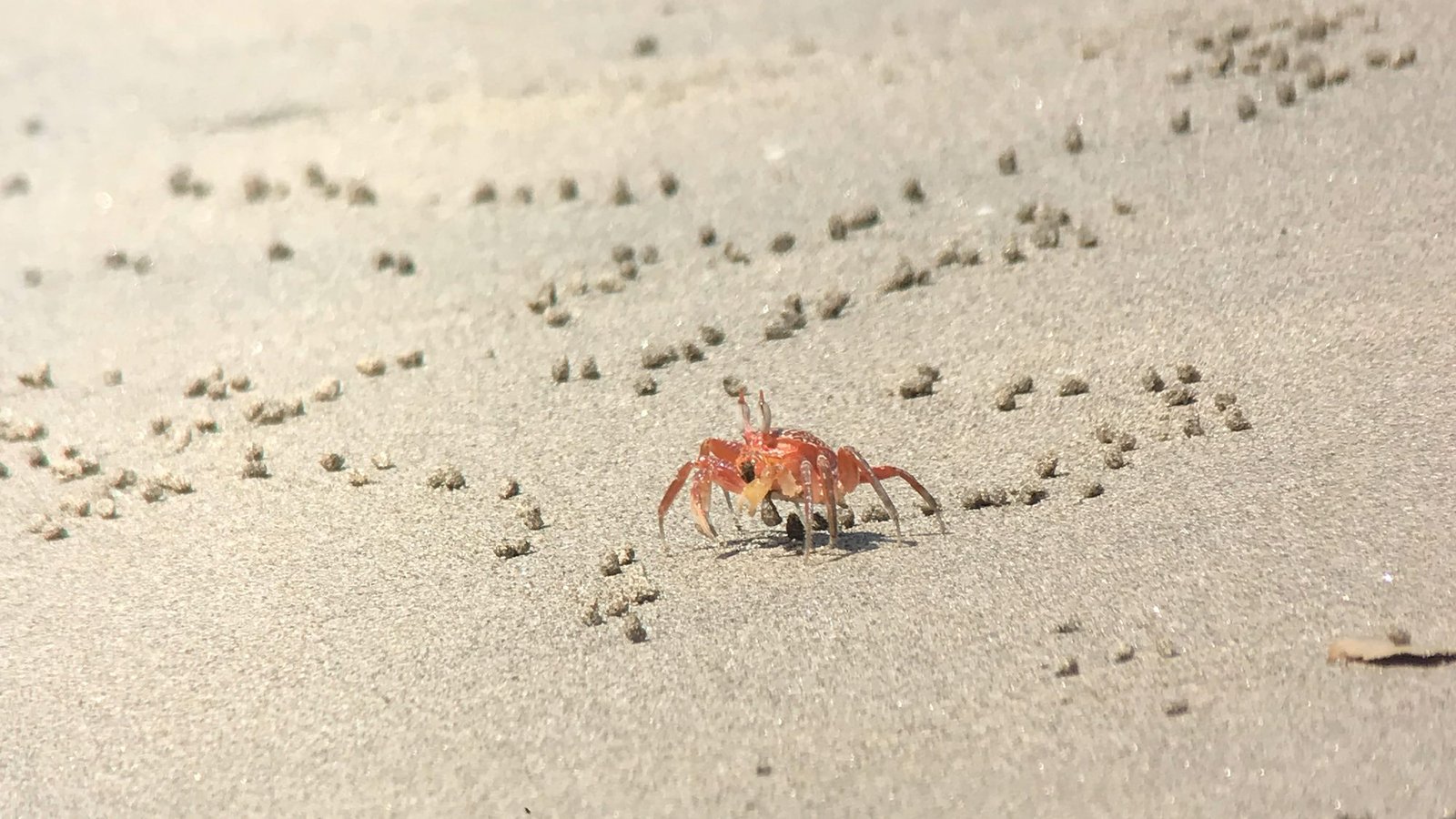
The realistic list on a morning walk: brown-throated three-toed sloths and Hoffmann’s two-toed sloths, white-faced capuchin monkeys, mantled howler monkeys, Central American agoutis, green and black iguanas, basilisk lizards, raccoons and coatis, hermit crabs on the beach trail, and a long bird list that regularly includes toucans and trogons. Central American squirrel monkeys — the small ones the park is known for — move in troops and are a good morning, not a given.
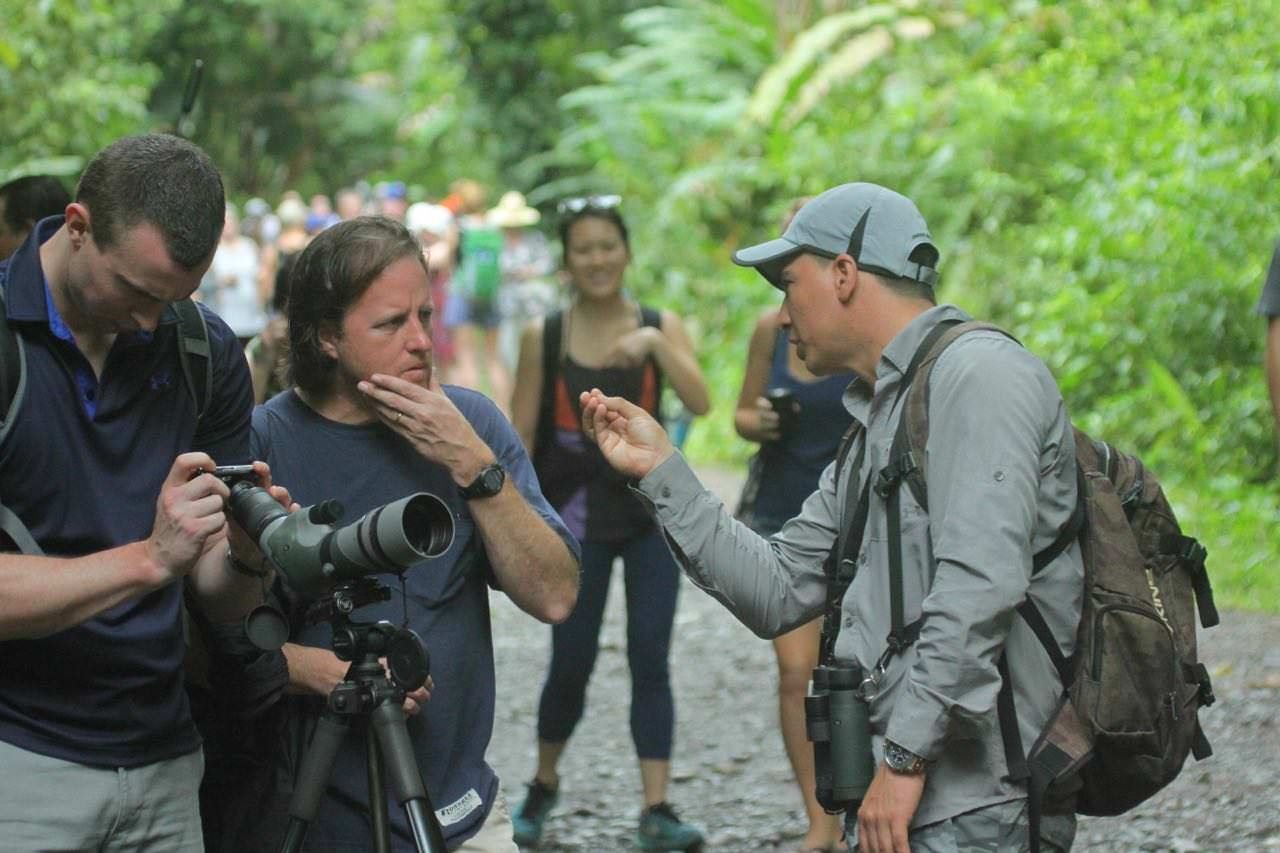
We will not promise you any single animal, and you should be suspicious of any operator who does. What a guide changes is the arithmetic: sloths and most birds sit around 20 metres up and are close to invisible to an untrained eye. A certified naturalist with a spotting scope finds what you would walk past. Scarlet macaws are the honest edge case — occasional here, a flyover rather than a sighting; the reliable macaw locations are further down the coast. Full odds by species are on our Manuel Antonio tour wildlife sightings page, and our weekly wildlife sighting report tracks what guides are seeing right now.
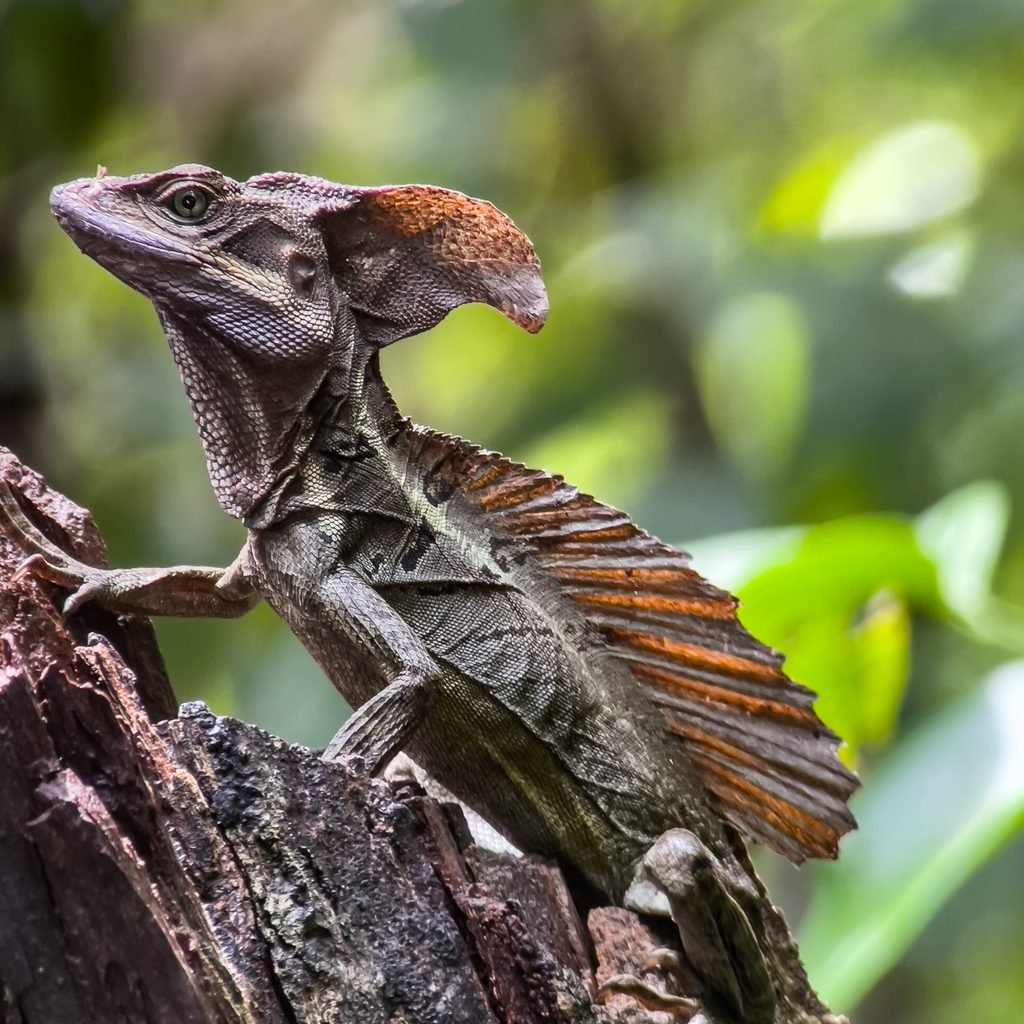
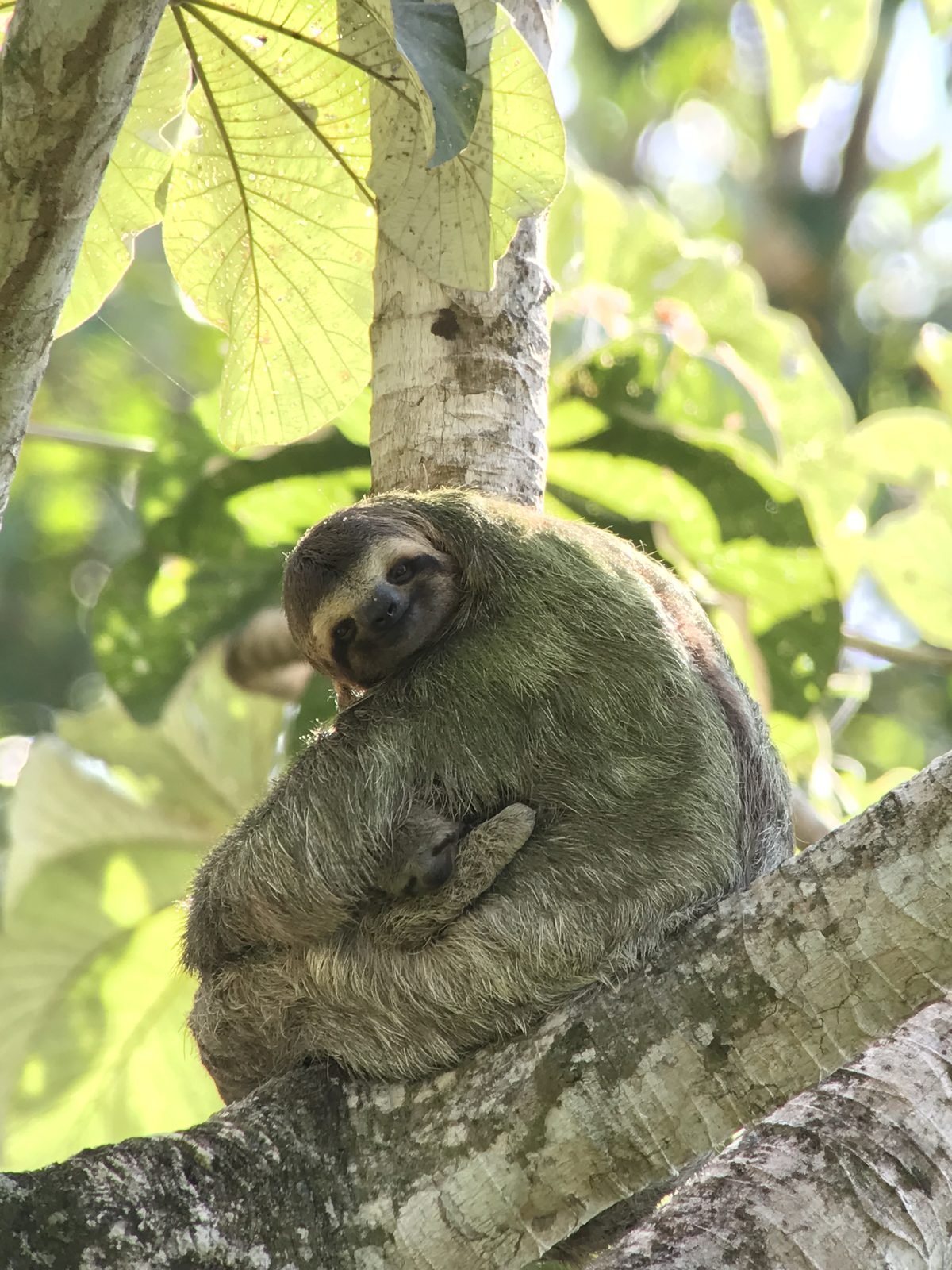
The Perezoso trail — the flat main corridor — and it is named for exactly that reason. Sloths sleep 15 to 20 hours a day wedged in the crook of a branch, and the trees along that stretch are the ones guides know individually.
Time of day matters as much as trail. The first two hours after opening are when animals move and the trail is coolest and emptiest; by 11 a.m. the same walk gives you a fraction of the sightings. This is the single biggest lever a visitor controls.
The white-faced capuchins will try, and they are good at it. They work the beach area and the picnic spots, they recognise plastic bags and daypacks as food containers, and they open zips. Keep food sealed and out of sight, do not leave a bag unattended on the sand, and do not hold food out.
The rule that matters more than any of that: do not feed them. Feeding is what made them aggressive in the first place, it is prohibited, and it damages the animals. If a capuchin approaches, stand up, do not run, and do not try to hold on to a bag it has grabbed — they bite and there is no version of that fight you win.
Not in the park’s swimming cove. The crocodiles everyone has seen photos of are at the Río Tárcoles bridge, on Route 34 on the drive down from San José — a roadside stop, not part of Manuel Antonio. It is worth ten minutes if you are driving.
Inside the park, the animals to respect are the ones you will actually meet: capuchins (see above), and snakes, which are present, mostly nocturnal, and almost never a problem for people who stay on the trail and do not put hands into vegetation. There is also a practical hazard nobody warns about — the manchineel trees near the beach. Do not shelter under them in rain. Guides know which ones they are.
No — a ticket and your ID get you in, and the trails are well marked and safe to walk alone. A guide is not a requirement; it is the difference between a walk in a forest and a wildlife walk.
The honest version of the trade-off: without a guide you will see monkeys, because monkeys find you. You will probably walk past several sloths, because they do not move and they are 20 metres up. With a certified naturalist and a scope, the sloths, the trogons and the snakes become visible. If the park is the one nature day of your trip, the guide is the part of the budget with the highest return. If you have two weeks and six parks ahead of you, walking this one alone is a reasonable choice.
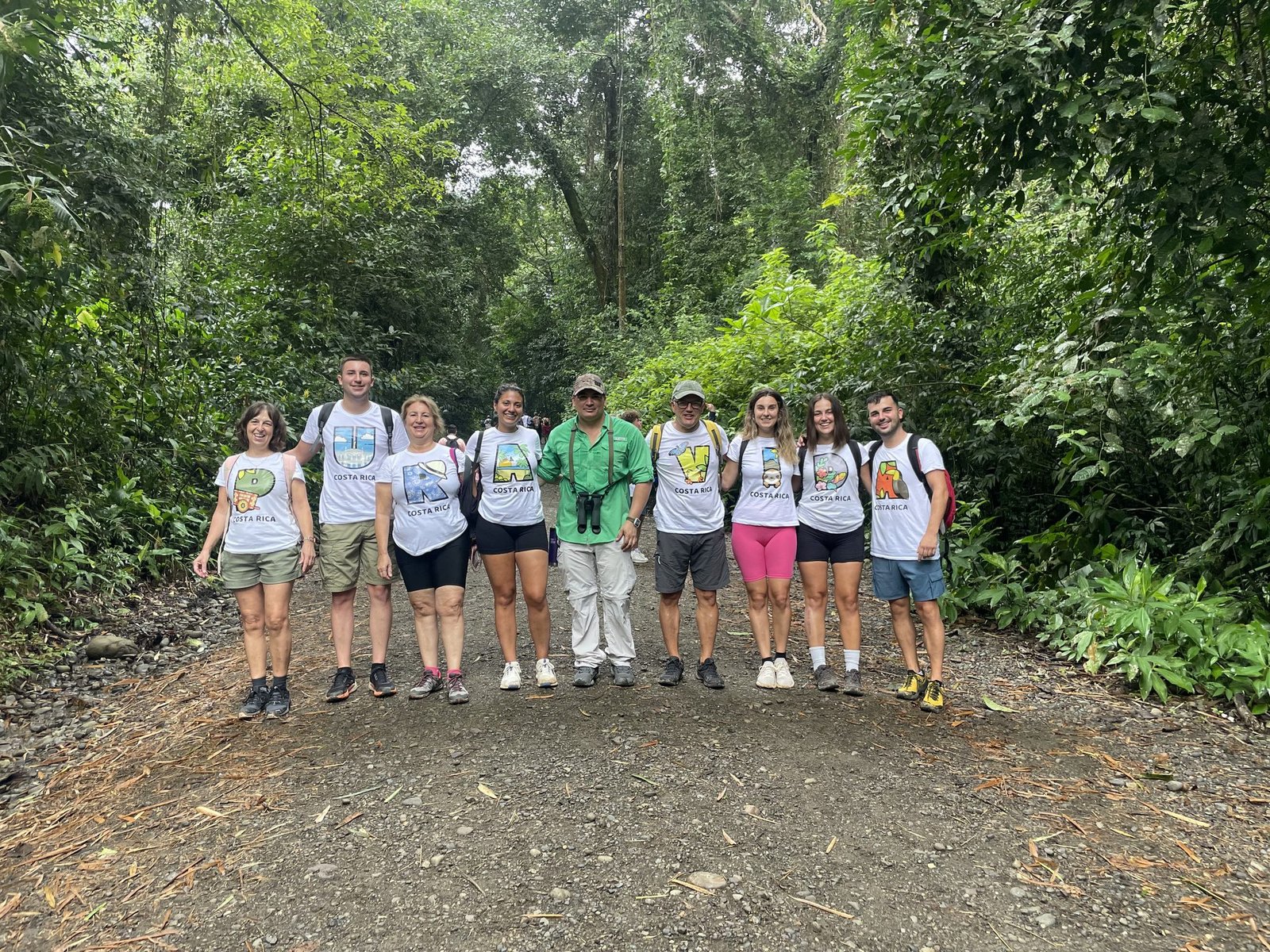
Ours start at $30 per person for the Classic Group (max. 10 people, 2 hours, ICT-certified bilingual guide, Swarovski scope and 4K photos of your own sightings; park ticket bought separately). Premium is $65 with the ticket and round-trip hotel transport in Quepos and Manuel Antonio included. Classic Private is $69 and VIP Private is $100 with ticket, private transport, snack and a Costa Rican lunch. Children 3–12 pay $10 less on every option.
How to hire well, regardless of who you book: book before you arrive, check that the guide is ICT-certified, confirm in writing whether the park ticket is included, and confirm the group size — a “group tour” of 25 people behind one scope is not the same product as one of 10. Every inclusion line is itemised in our cost guide, and you can ask us anything on WhatsApp +506 8514 1361 before you pay anyone.
By what they cannot show you. Certified naturalist guides in Costa Rica carry ICT accreditation and can produce it; the men who approach cars and queues at the Manuel Antonio entrance offering a cheap walk usually cannot, and some of them are selling a park “ticket” that does not exist.
Three checks, ten seconds each: ask for the accreditation, ask for the company name and look it up on your phone, and never hand over cash for a park entry to anyone outside the official online system. A real guide will not be offended by any of the three.
Outside food is the one that surprises people: the park restricts what you can bring in, precisely because fed monkeys became aggressive monkeys. Single-use plastics, alcohol, drones, pets and smoking are also out, and bags are checked at the control.
Water is allowed and you should carry it — in a reusable bottle. There is drinking water and there are toilets inside. Plan to eat before or after; there are restaurants along the road within a few minutes’ walk of the entrance.
Closed walking shoes or sport sandals with a heel strap — the main trail is flat but the branches are root-laden and slick after rain, and flip-flops are the most common footwear mistake here. Light long-sleeve or quick-dry clothing, a hat, reef-safe sunscreen and insect repellent applied before you enter.
Bring: water, your ticket (on your phone is fine) and your passport or ID, swimwear and a quick-dry towel if you plan to stay for the beach, and a dry bag or a plastic sleeve for your phone in green season. Leave the tripod and the big bag; you will be glad of the lighter load by 10 a.m.
December to April is the dry season and the most reliable weather; May to November is the green season, with rain concentrated in the afternoon for much of it and the heaviest months in September and October. December is the sweet spot for most visitors — dry, green from the rains that just ended, and the wildlife still active — which is exactly why it is also the most crowded and the hardest month for tickets.
Be careful with rainfall numbers for Quepos: the sources differ by a factor of two. Weather2Travel’s table sums to roughly 3,600 mm a year with about 128 mm in December; Weather-and-Climate, using gridded Copernicus data, gives 7,414 mm a year. Treat any single figure as an order of magnitude, not a measurement. Our month-by-month breakdown is in the best time to visit Manuel Antonio.
The park stays open and the tour runs. Rain in this forest is normal and it is not a reason to cancel — in green season it usually arrives in the afternoon, after the morning walk is done, and a light morning shower often improves the walking: fewer people, cooler air, and animals that move.
What you want is a poncho rather than an umbrella (you need your hands for the scope and the handrails) and footwear that copes with wet roots. We do not cancel for rain. We would cancel for something that made the trails genuinely unsafe, and that is rare.
At opening — 7:00 a.m. Arrive 15 minutes early at the entrance, not at the beach. The first hours are cooler, the trail is emptiest, and wildlife activity is at its peak; by late morning both the heat and the visitor numbers rise and the same walk yields much less.
If you can only come in the afternoon, come anyway, but adjust what you expect: afternoons are better for the beach than for the forest, and the park stops admitting well before the 3:00 p.m. close.
Partly. The main trail from the entrance is wide, flat and hard-packed, which is the most accessible stretch of national park trail most visitors will find in Costa Rica, and it is the stretch where most wildlife is seen. The branch trails — Mirador, Catarata, the Punta Catedral loop — involve steps, roots and gradient and are not passable.
Reaching the sand at Playa Manuel Antonio involves a slope and loose surface. If someone in your group has limited mobility, plan the main trail and the viewpoint over the cove rather than the beach itself, and tell us in advance so the guide paces the walk accordingly.
The trails are safe and patrolled, and the park is one of the most controlled environments in Costa Rican tourism. The risks are the ordinary ones: petty theft from unattended bags on the beach, sun and dehydration, rip currents on the public beach outside the boundary, and monkeys going through anything left open.
Practical version: keep valuables with you and out of reach, swim inside the cove rather than on Playa Espadilla outside, drink more water than you think you need, and stay on marked trails. We have walked this park several times a week for years without incident.
Yes, and many people do — but a same-day round trip from San José is a hard day: three to four and a half hours each way plus the park, which means leaving before 4:00 a.m. to be at the gate at opening. It can be done. It is not a good day.
One night in Quepos or Manuel Antonio changes the whole trip: you arrive the afternoon before, you walk into the park at 7:00 a.m. rested, you have the beach afterwards, and you drive back when you feel like it. If you are choosing where to spend one extra night in Costa Rica, this is a good place to spend it.
It is the most visited national park in Costa Rica and it works with a daily visitor cap, so it is busy without ever being unlimited. Crowding is concentrated in a predictable way: mid-morning, on the main trail, in the last two weeks of December and in Easter week.
Three levers actually work. Enter at 7:00 a.m. Go on a Wednesday or Thursday rather than a weekend. And walk the branch trails while everyone else queues along the main corridor — the Mirador is empty at the hour the beach path is not.
There is no single scam; there are three recurring ones, and they all happen outside the park gate. The fake parking attendant who flags you down early on the road. The unaccredited “guide” who joins your group at the entrance and asks for cash at the end. And the resold or non-existent park ticket — entry is sold online through SINAC only.
All three are avoided by the same three habits: book your ticket yourself online, book your guide before you arrive with a named company you can look up, and drive to the official parking GPS point instead of stopping for the first vest you see. Nothing about the park itself is a trap. The road leading to it has a few.
Work backwards from the ticket window. Pick your date and confirm it is not one of the nine closed Tuesdays. Two months before that date, buy the SINAC ticket the morning the calendar opens. Book your guide at the same time — the Christmas and New Year weeks are the only dates we regularly run out of.
Our prices do not carry a high-season surcharge: the Classic Group is $30 in December exactly as it is in June. Every open date for the season, plus the weather and crowd detail for those two months, is on our season page: book December and January dates there.
Everything above is what we would tell a friend flying in. If you want the version where someone finds the sloths for you, our Manuel Antonio National Park guided tour starts at $30 per person with an ICT-certified naturalist, a Swarovski scope and 4K photos of your own sightings, max. 10 people. We are rated 4.99/5 from more than 4,850 reviews across Google, TripAdvisor, Viator and Airbnb. Message us on WhatsApp +506 8514 1361 with your date and we will tell you the same day whether the park is open and whether we have space — and if the answer is no, we will tell you that too.
Beach by beach: Playa Manuel Antonio is the sheltered cove where the water is usually calm enough for children. Playa Espadilla Sur is the wide beach on the other side of the Punta Catedral isthmus, and the one people confuse with the free public beach. Playa Gemelas and Playa Escondida sit past Punta Catedral and access has to be confirmed at the control point on the day.
Still deciding how to fill the rest of your days? Our guide to things to do in Manuel Antonio lists 18 options with prices, durations and who each one suits.
Going as a family? Our guide to Manuel Antonio National Park with kids covers stroller-friendly trails, real walking times with children and what each tour costs per child.
Sloths are the animal most visitors come for: our dedicated Manuel Antonio sloth tour page covers both species, the hour with the best odds and the four prices.