
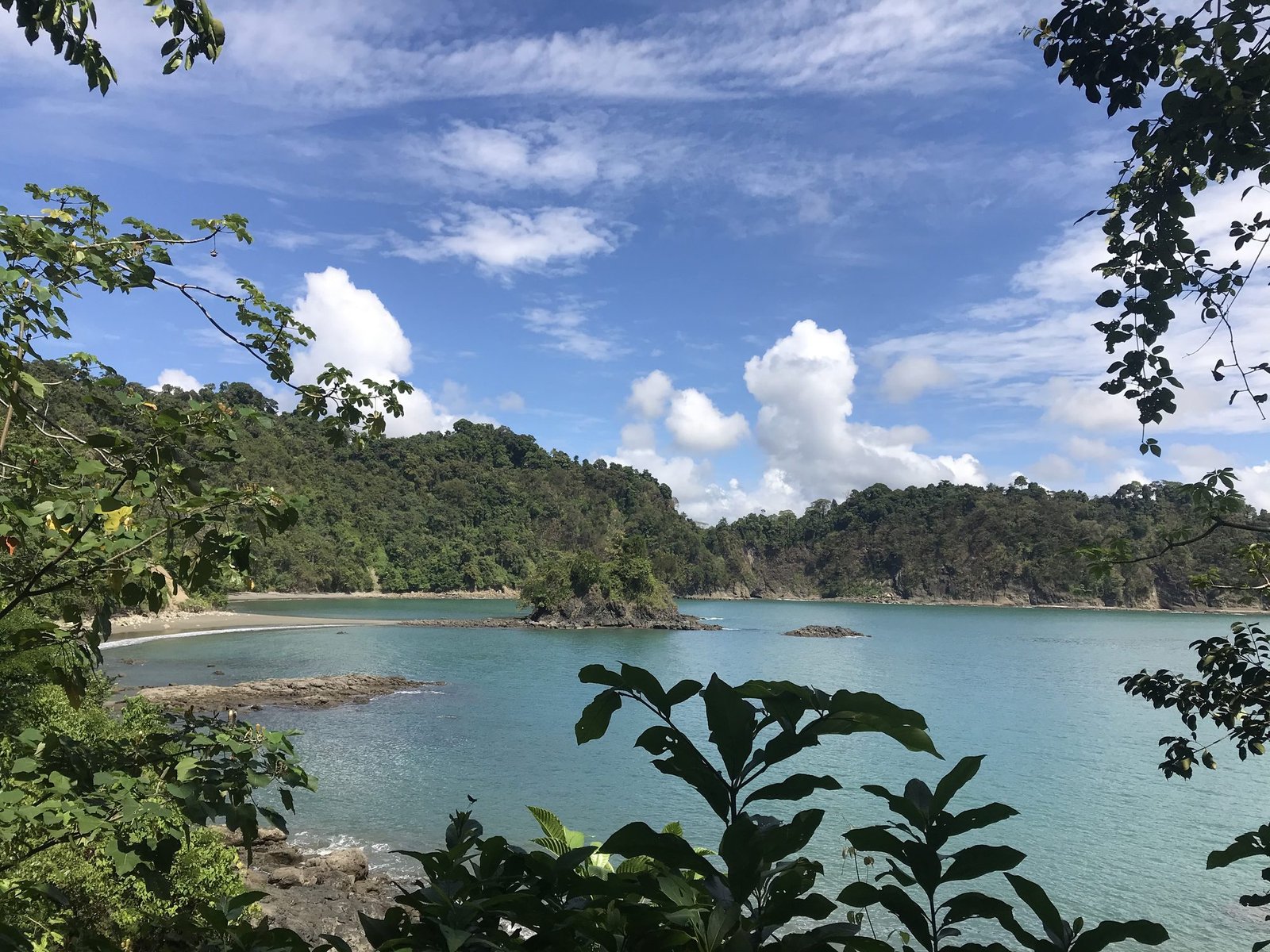

If you’re planning a Costa Rica trip from the U.S., one question keeps coming up: when is the best time to visit Manuel Antonio National Park? The honest answer is that there’s no bad time — this stretch of Pacific coast is warm, green and full of wildlife all year. But each season has its own personality, and picking the right window can mean the difference between sharing a trail with a crowd and having a troop of monkeys almost to yourself. Here’s exactly what to expect month by month.
Manuel Antonio Weather: The Two Seasons
Costa Rica doesn’t have spring, summer, winter and fall. It has two seasons, and understanding them is the key to timing your trip.
Dry Season (December–April)
This is the classic “postcard” window: mostly sunny days, low humidity and temperatures from 75°F to 90°F (24–32°C). Trails are dry and easy to hike, the ocean is calm and clear for snorkeling, and with less foliage on the trees, wildlife is often easier to spot near the trails and water sources. The trade-off? These are the busiest and priciest months. Christmas, New Year’s and Easter (Semana Santa) week book out fastest, so reserve your tours and park entry weeks ahead.
Green Season (May–November)
Don’t let the phrase “rainy season” scare you off. Most green-season days follow a reliable rhythm: bright, clear mornings followed by a warm afternoon shower that freshens everything up. You get lush jungle, fewer crowds and lower prices — plus a noticeable jump in activity from birds, frogs and reptiles. If you start early (the way our tours do), you’ll often be back before the rain even thinks about arriving.
Manuel Antonio weather in December and January
December and January are hot and mostly sunny in the morning, but they are not rainless: long-term averages for Quepos, the town at the park gate, give December about 128 mm of rain over 14 days with some rain, and January about 57 mm over 11 days, with daytime highs near 29 °C (84 °F) in both months.
| Month (Quepos) | Daytime high | Night low | Rain | Days with some rain | Sunshine per day |
|---|---|---|---|---|---|
| November | 29 °C (84 °F) | 22 °C (72 °F) | 353 mm | 17 | 6 h |
| December | 29 °C (84 °F) | 22 °C (72 °F) | 128 mm | 14 | 6 h |
| January | 29 °C (84 °F) | 22 °C (72 °F) | 57 mm | 11 | 7 h |
| February | 30 °C (86 °F) | 22 °C (72 °F) | 28 mm | 8 | 7 h |
Source: weather2travel.com, Quepos long-term climate averages, checked 21 September 2026. Other datasets for this coast give higher rain totals: weather-and-climate.com (Copernicus 1991–2020 gridded data) puts the whole year near 7,400 mm and names January the sunniest month, with about 9 hours of sun a day. So read the millimetres as an order of magnitude. What every source agrees on: rain drops sharply from November to December, January is drier still, and February and March are the driest months of the year.
What that means on the ground: December is a transition month, with the forest still green from the rainy season and the odd shower; by January the trails are drier. The rain that does fall usually arrives in the afternoon or evening, which is why our tours start early. Pack for heat first and for a short shower second.
Best Time for Wildlife in Manuel Antonio
Wildlife is the real reason most travelers come, so here’s how the calendar plays out for the animals on your bucket list.
- Sloths, monkeys and toucans: Present year-round. Early morning is always the best time to see them, regardless of season.
- Endangered squirrel monkeys (mono tití): These tiny, hyperactive monkeys live only in this corner of Costa Rica. They’re the hardest species to find — independent visitors spot them on just 20–30% of visits, but that jumps to 50–60% with a guide who tracks the troops’ recent movements.
- Birds: Peak birdwatching runs December through March, when resident species are joined by migratory birds from North America — a paradise for photographers on a dedicated birdwatching tour.
- Frogs and reptiles: The green season (especially the wetter months of September–November) brings amphibians and reptiles to life, ideal for a night walk.
Whale Watching Season in Manuel Antonio
Here’s a secret that makes the “off” season anything but: Manuel Antonio has one of the longest humpback whale seasons on Earth. Two separate populations pass by, so sightings are possible during two windows:
- July–November (Southern Hemisphere humpbacks) — the longer, more reliable season
- December–April (Northern Hemisphere humpbacks)
August through October offers the highest odds of close encounters, when mothers and calves cruise the warm Pacific waters just offshore. If a whale-and-dolphin boat trip is on your list, this green-season window is prime time — one more reason not to write off the “rainy” months.
When Is Manuel Antonio National Park Closed?
This is the single most important planning detail, and it trips up first-time visitors constantly:
⚠️ Manuel Antonio National Park is closed every Tuesday, all year. Build your itinerary around it.
The park also runs on timed entry slots (7:00, 7:30, 10:00 AM, 12:30 and 1:00 PM), and daily capacity is capped at roughly 1,200 visitors — which sells out in high season. In 2026, park entrance is $18 for adults, $5 for kids ages 2–12, and free for under 2. Booking a guided Manuel Antonio National Park tour takes the guesswork out of slots, tickets and passport paperwork so you can just show up and enjoy it.
Month-by-Month at a Glance
- December–February: Peak dry season. Best weather, best bird migration, biggest crowds and prices. Book early.
- March–April: Still dry and sunny, Easter week is very busy, then crowds ease toward late April.
- May–June: The green season begins — great value, lush scenery, sunny mornings, and thinner crowds.
- July–August: Whale season kicks off and North American families travel; a sweet spot of good wildlife and manageable crowds.
- September–October: The quietest, greenest, most affordable months — and the peak of whale watching. A favorite for travelers in the know.
- November: The rain tapers off, the jungle is at its greenest, and high-season prices haven’t returned yet.
Does the Manuel Antonio tour run if it rains?
Yes, tours run in normal rain, and if the park closes for weather we reschedule your tour at no cost.
Manuel Antonio is a rainforest, and a shower does not stop the animals; many guests say the forest is at its most alive right after it rains. Thunder and lightning are different from rain: if conditions are unsafe, the guide does not take the group in. Guest cancellations are covered in our cancellation policy.
What should I wear to Manuel Antonio in December?
Wear light, quick-dry clothes and comfortable walking shoes, and bring a light rain jacket or poncho: daytime highs sit near 29 °C (84 °F) with high humidity, and a short shower is still possible in December.
Put your swimsuit on underneath if you plan to stay on the park beaches after the tour. Bring water (outside food and snacks are not allowed inside the park), sunscreen and a hat, since the UV index on this coast reaches 10 to 11, and a dry bag for your phone. Skip the umbrella: it gets in the way on the trail and in front of the spotting scope.
What time of day do you see the most animals in Manuel Antonio?
Early morning, right after the park opens at 7:00 AM, is when wildlife is most active and the trails are quietest, which is why our tours start then. Rainfall, rainy days and sunshine for every month are in Manuel Antonio National Park weather month by month.
From 7:00 to 9:00 AM the air is cooler and howler monkeys are often heard before they are seen. From about 9:00 AM the big tour groups arrive and the main trails fill up. In December and January the morning is also the driest, sunniest part of the day. We never promise a specific animal, because this is wild nature, but an early start and a guide with a spotting scope change the odds a lot.
Is December the dry season in Manuel Antonio?
December is the start of the dry season, not the middle of it: rain falls sharply from about 353 mm in November to about 128 mm, but Quepos still averages 14 days with some rain in December, against 11 in January and 8 in February.
If dry trails matter most to you, January to March is the safer window; if you want the forest still green with far fewer showers than the rainy season, December works well. Either way the park is closed every Tuesday, so check whether Manuel Antonio is open today and the December–January calendar. SINAC only sells park tickets two months ahead, so check December 2026 dates early.
So, When Should You Go?
If you want the most sunshine and don’t mind crowds or higher prices, aim for December to April. If you’d rather trade a few afternoon showers for lush scenery, whale sightings, lower prices and quiet trails, the green season (May–November) is a genuinely fantastic — and underrated — time to visit.
Whichever month you choose, two things stay true: start early, and go with a local naturalist. Solo visitors spot only 20–30% of the wildlife around them, while a certified guide with a high-powered spotting scope pushes that to 70–95%. Every Wakoo Tours guide carries a Swarovski spotting scope, is ICT-licensed, and sends you free 4K photos and video of everything you saw. Want the trails to yourself no matter the season? Our private VIP wildlife tour includes park entry and pro photography, and the Damas mangrove tour adds a whole second ecosystem to your trip.
And because every guest matters beyond their visit, each Wakoo tour donates $2 per person to local kids through Kazan Karate for Kids — so whenever you come, your trip gives back.
Not sure which month or which tour fits your trip? Message us on WhatsApp — we reply in under 2 minutes, in any language.
Guide: Jason Solano Zamora, ICT-licensed naturalist guide and founder of Costa Rica Wakoo Tours.
Set on December? That is our busiest stretch of the year. SINAC only opens park tickets two months ahead, and Manuel Antonio is closed nine Tuesdays across this window (Dec 1, 8, 15, 22, 29 and Jan 5, 12, 19, 26) — check December 2026 dates before the high season books out.
Questions before you book? WhatsApp us at 8514-1361 and a guide answers, not a bot.
Planning by month: beaches, wildlife and tours
Once you have picked your month, these guides cover the rest of the trip. December and January travellers should start with Manuel Antonio wildlife in December and January, which lists what is active in each of those two months. For the full shortlist of departures and prices this season, see the best Manuel Antonio tours in 2026, and if you are staying outside Quepos, the Manuel Antonio tour with transportation includes door-to-door pickup.
The three beaches inside the park each behave differently depending on the season and the tide: Playa Manuel Antonio is the calm, swimmable one in the horseshoe cove, Playa Espadilla Sur is the long open stretch on the north side of the tombolo, and Playa Gemelas is the quiet pair of coves reached by the far trail.
Picked your month? The complete guide to Manuel Antonio National Park, Costa Rica covers everything else: tickets, trails, wildlife and the 7:00 a.m. rule.
0 Comment