
A Manuel Antonio sloth tour is a guided morning walk inside Manuel Antonio National Park with a certified naturalist guide and a Swarovski ATX spotting scope, built around finding the park’s two resident sloth species. It starts at the 7:00 a.m. park opening, costs between $30 and $100 per person depending on the option, and it is the single most requested reason visitors book a guide here. This page is the honest version: which sloths live here, what hour gives you the best odds, what the scope actually does, and what each option costs.
Message us on WhatsApp at +506 8514 1361 or book your December Manuel Antonio tour date.
Two species: Hoffmann’s two-toed sloth (Choloepus hoffmanni) and the brown-throated three-toed sloth (Bradypus variegatus). They are not two sizes of the same animal – they sit in different families, they keep different hours, and that difference decides which one you are realistically going to see on a daytime walk.
The three-toed sloth is the one in almost every photograph from this park. It is smaller, grey-brown, with the dark eye mask and the fixed upturned mouth that reads as a smile, and it is diurnal: awake and slowly feeding during the day. The two-toed sloth is bigger, shaggier, blonder, with a pig-like snout and no face markings, and it is nocturnal. On a morning walk you will usually find it as a motionless ball of fur wedged in a branch fork, asleep.
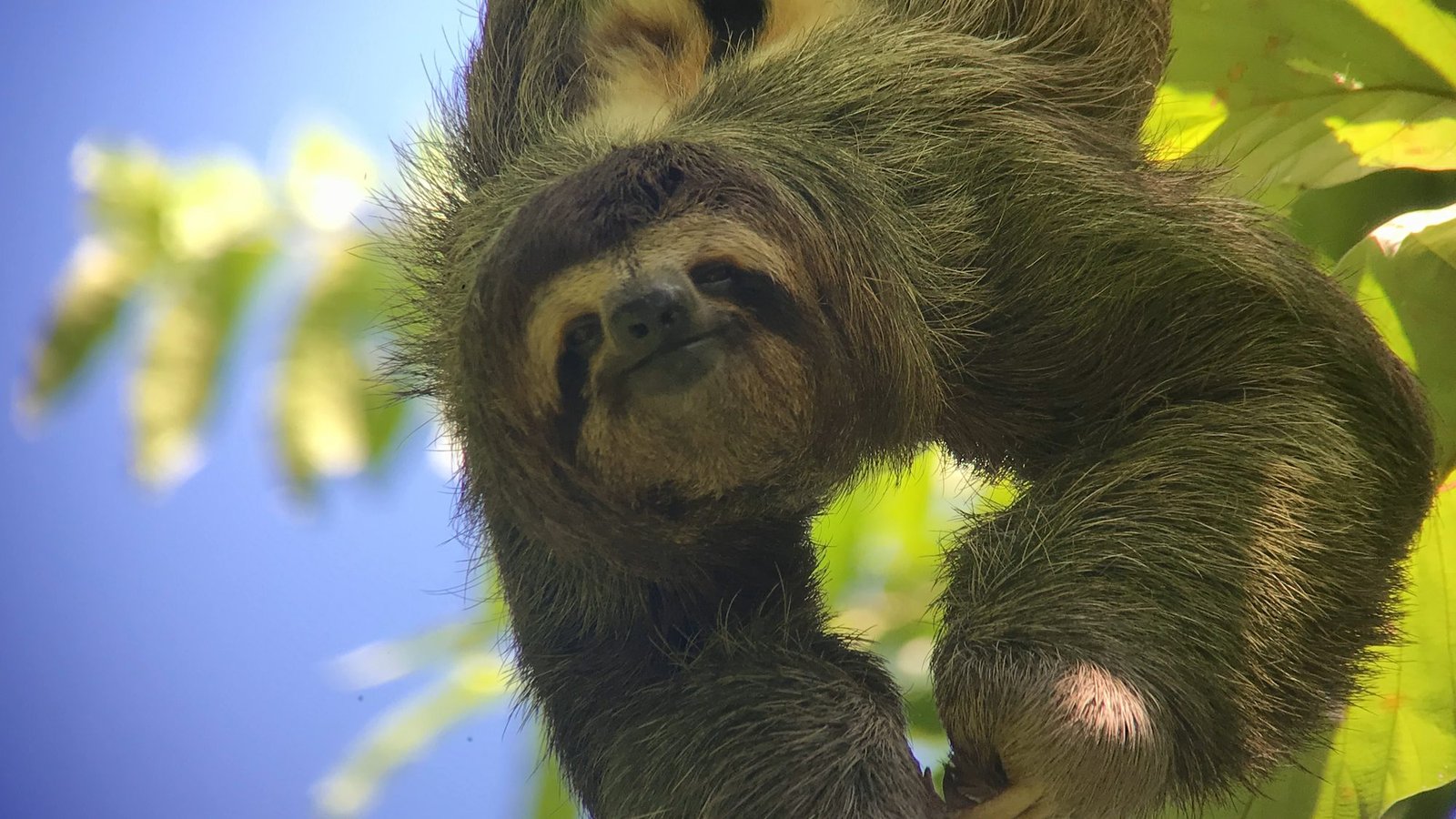
The first two hours after the 7:00 a.m. opening, and it is not close. Three-toed sloths do most of their slow feeding movement in the cool of the early morning, and movement is what a guide’s eye catches from twenty-five metres below. After roughly 10:30 a.m. the large bus groups arrive, the trail noise rises and the day heats up – animals settle higher and stop moving.
Being honest about probability rather than promising a sighting: on the early guided walk, sloths are among the animals our guides find most consistently, well ahead of anteaters or ocelots and roughly on par with white-faced capuchins and howler monkeys. On an unguided midday walk, most visitors see none. Neither statement is a guarantee – these are wild animals in a forest, and some mornings the individual that was in a tree on Tuesday has moved.
For a two-toed sloth actually awake and moving, the daytime park tour is the wrong product. That is the Manuel Antonio wildlife night tour, which runs outside the park after dark.
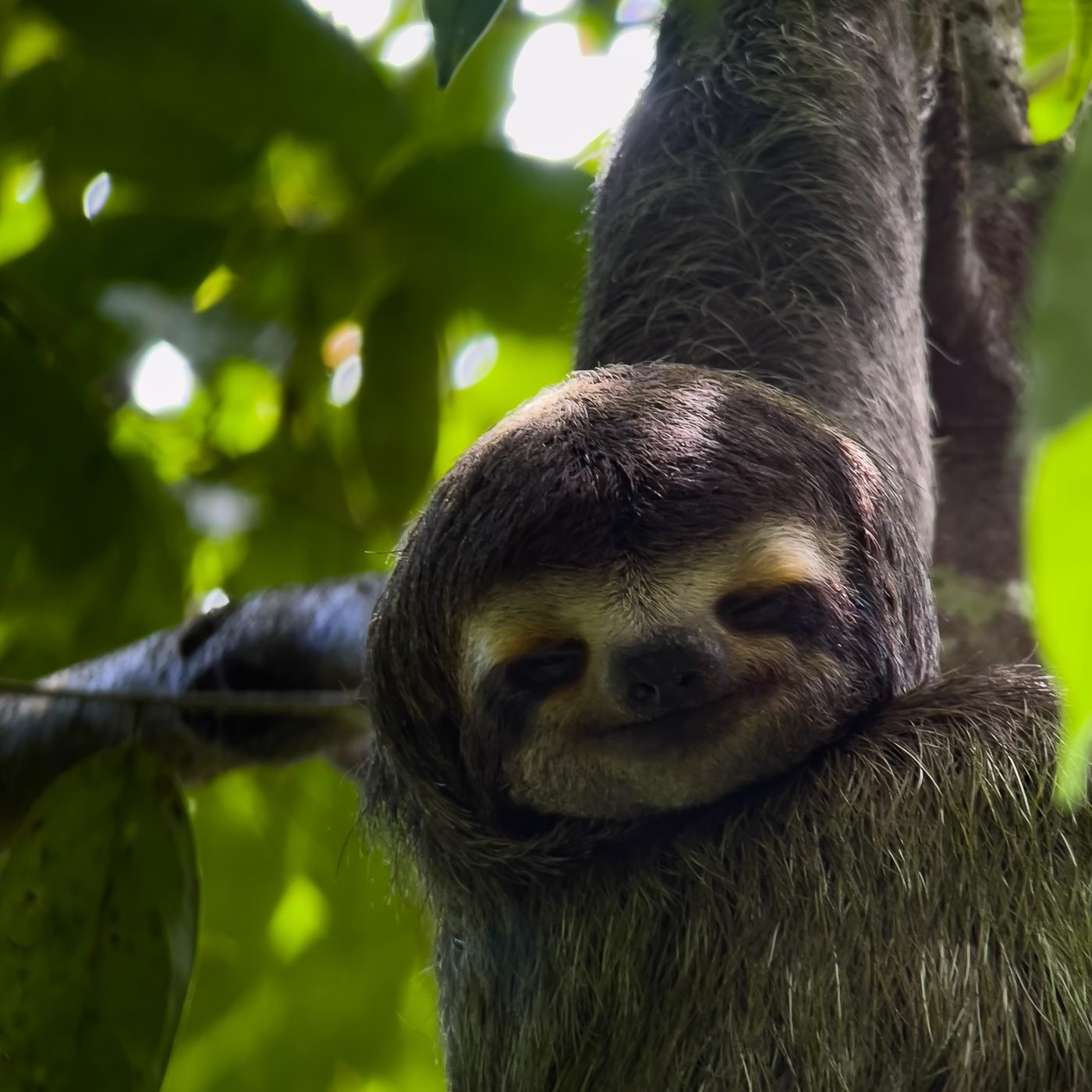
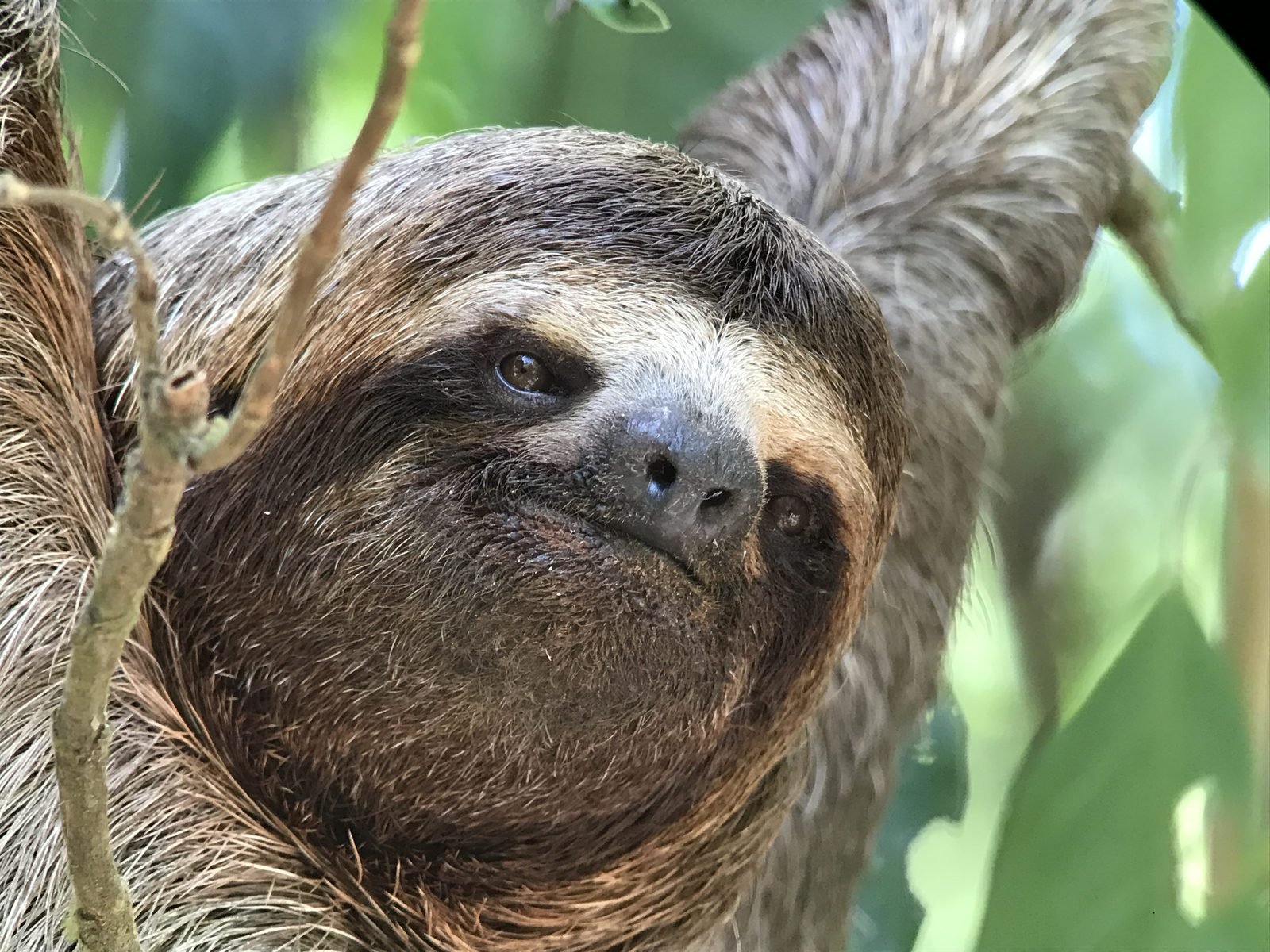
It turns a grey smudge in the canopy into an animal whose face you can see, and it lets everyone in the group see the same thing. A sloth twenty-five to thirty metres up in a cecropia occupies a few degrees of your field of view; with the naked eye you get shape and colour and nothing else, which is why people describe their first sloth as a lump. The ATX at 30-70x magnification fills the eyepiece with the head, the eye mask, the claws gripping the branch and – the detail that surprises people most – the green algae growing in the grooves of the hair.
The second thing it does is practical: it holds the animal steady on a tripod so a group of eight takes turns at the same sighting instead of eight people pointing in eight directions. And it takes phone photographs through the eyepiece that are genuinely usable, which is the only way most visitors go home with a sloth picture that is not a beige dot.
Because finding a sloth is a memory problem before it is an eyesight problem. Sloths move slowly and stay local – one individual may use the same handful of trees for weeks. Guides who walk these trails every single morning are not scanning the whole forest; they are checking the specific trees that were occupied yesterday, and they recognise the shape of an occupied fork from thirty metres away.
The rest is the training the ICT-certified naturalist guides here go through: knowing that sloths favour cecropia and guarumo, that the silhouette to look for is a wedge in a branch fork and not a hanging shape, and that a sloth on the ground once a week is a bathroom trip and not an emergency. A first-time visitor has none of that and no scope. That is the whole gap.
More on the decision: do you need a guide in Manuel Antonio.
All four run the same guides and the same Swarovski ATX scope; what changes is the group size and whether the park ticket and transport are included.
| Option | Price per person | Park ticket included | Group |
|---|---|---|---|
| Classic Group | $30 | No – add $18.50 per adult | Shared, up to 8 |
| Premium Group (all-inclusive) | $65 | Yes, plus transport | Shared, up to 8 |
| Classic Private | $69 | No – add $18.50 per adult | Your party only |
| V.I.P. Private | $100 | Yes, plus private transport, snack and lunch | Your party only |
The $30 Classic Group is the honest entry price and it is not going up. The number people miss is the $18.50 SINAC entrance on top of it – budget $48.50 per adult for the $30 option, or take the $65 Premium where the ticket is already inside. Full breakdown on the Manuel Antonio National Park guided tour page.
SINAC opens park entrance tickets roughly two months before the date and not earlier, so there is no way to hold a ticket for a date further out than that. This catches people who plan a Costa Rica trip six months ahead and assume the park works like a museum booking.
What this means for a December or January sloth tour: reserve the tour with us now, and the ticket gets bought the moment SINAC opens your date. The park caps daily entry, and in the December-January high season popular mornings do sell out. On the $65 Premium and $100 V.I.P. options we handle that purchase; on the $30 and $69 options you buy your own at sinac.go.cr.
Manuel Antonio National Park closes every Tuesday, so five days in December 2026 and four in January 2027 have no sloth tour at all: December 1, 8, 15, 22 and 29, 2026, and January 5, 12, 19 and 26, 2027. That leaves the park open 26 of the 31 days in December and 27 of the 31 in January.
If your only free morning falls on a Tuesday, the park walk is off but the night tour and the other Manuel Antonio tours still run. Month-by-month detail: December 2026 and January 2027.
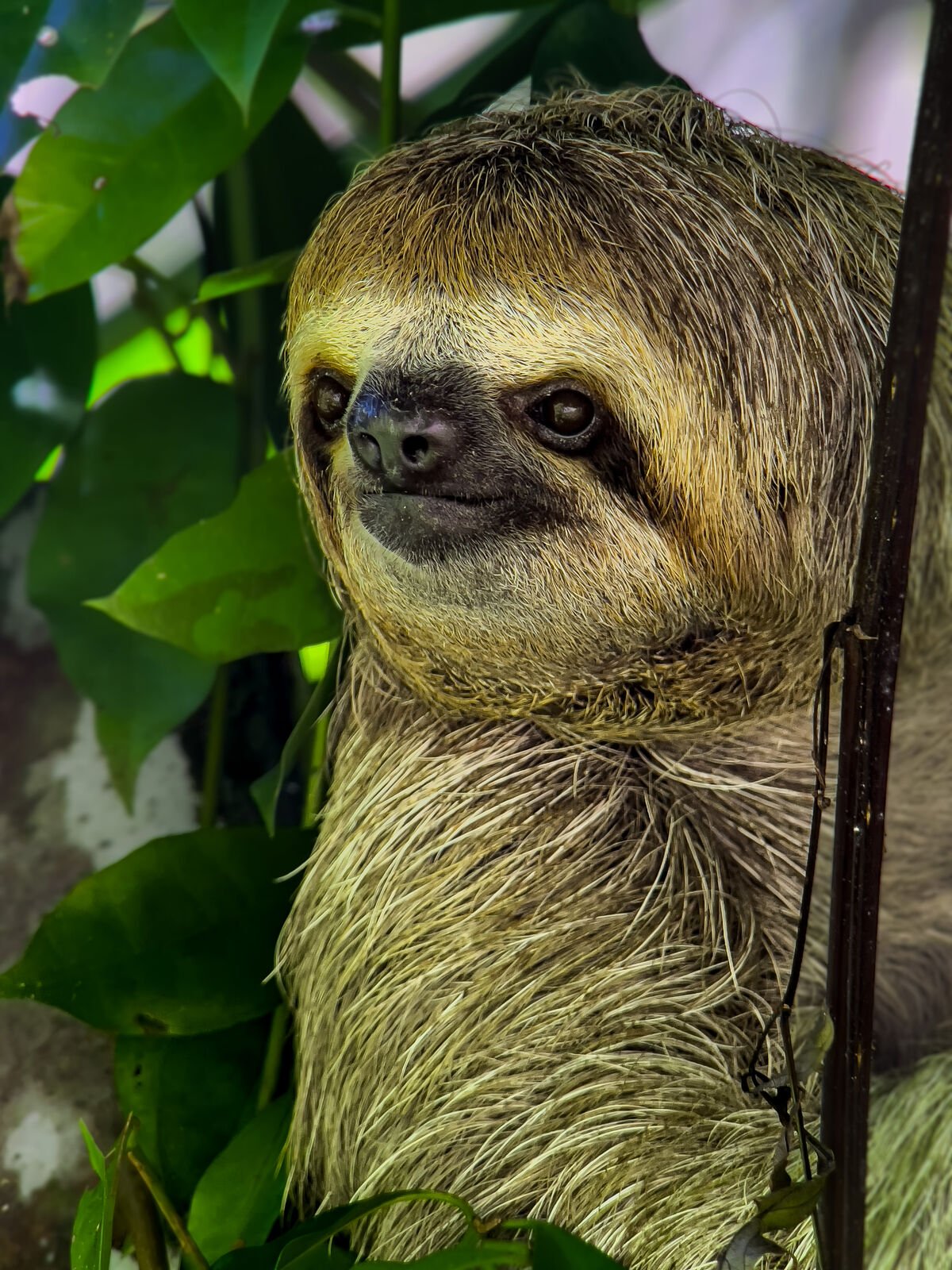
Yes. Manuel Antonio National Park holds both Costa Rican sloth species – Hoffmann’s two-toed sloth and the brown-throated three-toed sloth – and they are the single most requested animal on our tours. They are resident, not seasonal: the park has sloths every month of the year, including December and January.
No, and any company that guarantees it is selling you something it cannot control. Sloths are wild animals that move a few dozen metres a week and spend most of the day motionless in the canopy. What we can say honestly is that on a guided morning walk with a spotting scope, sloths are among the most frequently found animals in the park – far more reliably than on an unguided walk.
Not inside the national park. Kids Saving the Rainforest (KSTR) is a rescue and rehabilitation centre near Quepos that keeps non-releasable animals, and it is a separate ticket and a separate operation from ours. The Manuel Antonio sloth tour on this page is a wild-sighting tour inside the national park, not a sanctuary visit.
There is no trail officially named sloth trail. The stretch where our guides find them most often is the main Sendero El Perezoso boardwalk and the first section of the Punta Catedral loop, both of which run through low secondary canopy where cecropia and guarumo trees put sloths within scope range instead of forty metres overhead.
The 7:00 a.m. park opening. Three-toed sloths are active by day and are easiest to pick out in the flat early light before the canopy heats up; by 10:30 a.m. the large bus groups have arrived and the trail noise pushes wildlife higher. Two-toed sloths are nocturnal and are usually found asleep, balled up in a branch fork, at any hour.
You do not need one legally, but the odds change sharply. A sloth asleep twenty-five metres up looks exactly like a termite nest to an untrained eye. Certified guides walk the same trails every day, know which individual trees have been occupied that week, and carry a scope that turns a grey blob into a face. Most solo visitors walk directly under sloths without seeing them.
Four options: $30 per person Classic Group (guide only, park ticket not included), $65 per person Premium Group all-inclusive (guide plus the park ticket and transport), $69 per person Classic Private, and $100 per person V.I.P. Private. The SINAC park entrance is $18.50 per adult and is the part people forget to budget for on the $30 option.
Yes. Sloths do not migrate and are present through the December-January high season. The thing to plan around in December 2026 is not the sloths but the calendar: the park is closed every Tuesday, so December 1, 8, 15, 22 and 29 are closed, and in January 2027 it is closed January 5, 12, 19 and 26.
Pick a non-Tuesday morning, tell us how many adults and children, and we confirm the 7:00 a.m. meeting point. WhatsApp +506 8514 1361 is the fastest way to reach us, or book your December date here. Rated 4.9 out of 5 across 257 reviews.
Related reading: how to see sloths in Manuel Antonio, the full 2026 wildlife guide and all the animals of Manuel Antonio National Park.