

Ask most travelers what they hope to see in Costa Rica, and monkeys are almost always on the list — right up there with sloths. The good news for anyone heading to the Central Pacific coast: Manuel Antonio is one of the best places in the entire country to see monkeys in the wild. Three different species live here, including one you can see almost nowhere else on Earth. This 2026 guide covers who they are, where to find them, and how to make sure you actually spot all three.
How Many Types of Monkeys Live in Manuel Antonio?
Manuel Antonio National Park is home to three monkey species, each with a completely different personality:
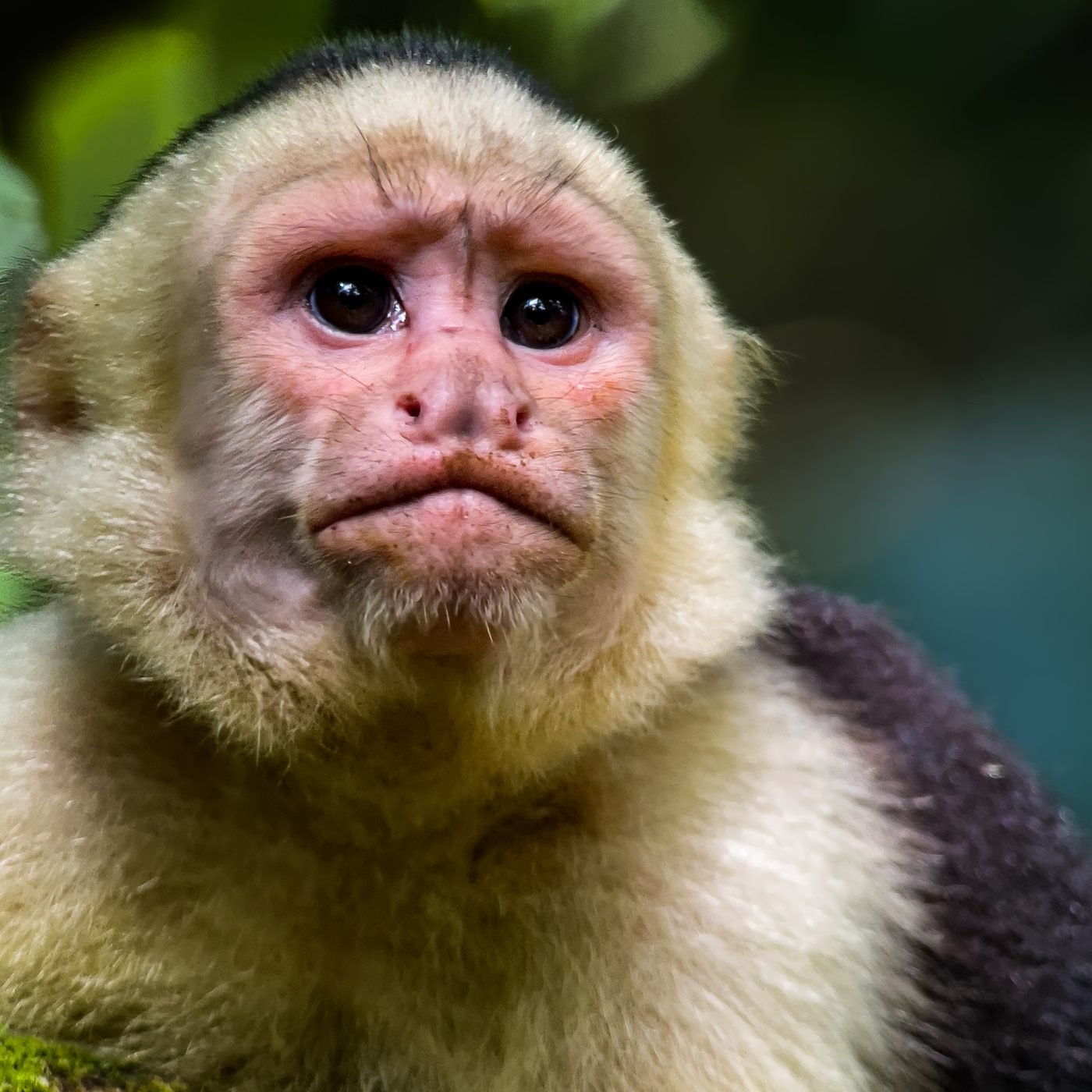
1. White-faced capuchin (Cebus imitator)
The bold, clever one. Capuchins have a black body, a bright pink-and-white face, and zero fear of humans — which is exactly why the park rangers ask you never to feed them. They travel in troops, forage along the trails and beaches, and are the monkey you’re most likely to see up close. Smart and curious, they’ve learned to open backpacks and unzip bags, so keep your snacks sealed.
2. Mantled howler monkey (Alouatta palliata)
The loud one. You’ll often hear howlers before you see them — their deep, roaring call carries over a mile through the forest and is one of the loudest sounds any land animal makes. Howlers are larger, slower, and spend most of the day resting high in the canopy munching leaves. Early morning is prime time for their dawn chorus.
3. Central American squirrel monkey — the mono tití (Saimiri oerstedii citrinellus)
The rare one, and the reason Manuel Antonio is special. The mono tití is the smallest monkey in Costa Rica — under a foot tall and barely two pounds — with an orange back, tiny hands, and a black-and-white facial mask. Here’s what most visitors don’t realize: this particular subspecies lives only in the Manuel Antonio and Quepos region on the entire planet. It is Central America’s most endangered monkey. Populations crashed from an estimated 200,000 in the 1980s to roughly 1,500 individuals today, driven by habitat loss. Seeing a troop of these little acrobats bounding through the canopy is a genuine bucket-list moment — and one that fewer and fewer people will get.
Where to See Monkeys in Manuel Antonio
Each species favors different parts of the park:
- Capuchins: Along the main trails and near Playa Manuel Antonio beach. Impossible to miss in high season.
- Howlers: High in the tall canopy, often near the park entrance and along the quieter loops. Listen for the roar and look up.
- Squirrel monkeys: The mono tití moves in fast, tight troops through the mid-level branches, often in the cecropia and secondary forest. They’re smaller and quicker than the others, which makes them the hardest of the three to catch — and the most rewarding.
Best Time to See Monkeys
Timing is everything with primates:
- Time of day: Early morning (7:00–10:00 AM) is by far the best window. Monkeys are most active feeding at dawn, before the midday heat sends them to rest in the shade.
- Time of year: Monkeys are here year-round. The dry season (December–April) offers easier hiking and clearer canopy views, but the green season delivers just as many sightings with fewer crowds.
- Day of the week: ⚠️ Manuel Antonio National Park is closed every Tuesday. Entry slots (7:00, 7:30, 10:00 AM, 12:30, 1:00 PM) sell out in high season, so book ahead.
Why a Guide Makes the Difference
Here’s the honest truth most travel blogs skip: solo visitors spot only a fraction of the wildlife around them. Capuchins are easy, but the endangered squirrel monkey is small, fast, and easy to miss entirely if you don’t know where and when to look.
A certified naturalist changes your odds completely. On every guided Manuel Antonio National Park tour, Wakoo guides carry a Swarovski spotting scope and know exactly which trees each troop favors that week. When a mono tití pauses on a branch, your guide frames it in the scope so you can see its tiny masked face in crisp detail — then sends you free 4K photos and video of everything you saw, no upsell and no watermark. For families and couples who want a slower pace and their own guide, the private VIP wildlife tour includes park entry and professional photography.
Beyond the Three: More Manuel Antonio Wildlife
Once you’re scanning the canopy with a guide, the monkeys are just the start. You’ll also likely spot sloths, iguanas, coatis, agoutis, and toucans overhead. Birders can go deeper on a dedicated birdwatching tour, night owls can meet the park’s nocturnal residents on a night walk, and for a totally different ecosystem, the Damas mangrove tour glides past monkeys, sloths, and caimans by boat.
See the Monkeys — and Help Protect Them
The mono tití’s story is a reminder that these forests are fragile. That’s why every Wakoo tour donates $2 per guest to local kids through Kazan Karate for Kids, supporting the community that shares its home with Central America’s rarest monkey. Come early, plan around Tuesday’s closure, and go with a local naturalist who can put all three species in the scope for you.
Not sure which tour fits your trip? Message us on WhatsApp — we reply in under 2 minutes, in any language.
Guide: Jason Solano Zamora, ICT-certified naturalist guide and founder of Costa Rica Wakoo Tours.
Are you guaranteed to see all three monkey species?
No, and the three are not equally likely. Capuchins are close to a sure thing — they forage along the main trails and the beach and are seen on almost every morning walk. Howlers are usually heard before they are seen, and the sound is so distinctive that most groups at least locate them. The endangered squirrel monkey, the mono tití, is the one that is genuinely not guaranteed: the troops move fast, high, and unpredictably, and there are only around 1,500 of them left. Seeing all three on one walk happens often, but it is a good outcome, not a promise.
Is it safe to be near capuchin monkeys?
Yes, as long as you keep your distance and your bag closed. Capuchins in Manuel Antonio have lost their fear of people, which makes them easy to photograph and also makes them opportunists — they have learned to unzip backpacks and open food containers. They will not approach a person who is not carrying food. The risk is not aggression, it is a monkey grabbing a snack from your hand and a bite that follows. Keep food sealed and inside your bag, do not hold anything out, and give them two metres.
Why should you never feed the monkeys?
Because feeding is what causes the problem the park is trying to undo. Human food gives monkeys nutrition they cannot process, spreads disease between species, and teaches troops to congregate near people instead of foraging — which concentrates them, increases conflict and makes them dependent. For the squirrel monkey it is worse still: a species down to roughly 1,500 individuals cannot absorb the losses that come from habituated troops crossing roads and power lines to reach people. Feeding wildlife is prohibited inside Manuel Antonio National Park, and the rangers enforce it.
Can you see monkeys in Manuel Antonio in December?
Yes — December is a strong month for monkeys. All three species are resident year-round, and the drier, clearer conditions of early December make canopy scanning easier. Two things to plan around. First, the park is closed every Tuesday: December 1, 8, 15, 22 and 29 in 2026, and January 5, 12, 19 and 26 in 2027. Second, December is the busiest month of the year and the morning entry slots — 7:00 and 7:30 AM, which are the best ones for primates — sell out first. If December is your window, book your December Manuel Antonio tour and take the morning slot while it exists.
What time do howler monkeys start calling?
Before sunrise, typically between 4:30 and 5:30 AM, and again at dusk. That dawn chorus is well before the park opens at 7:00 AM, so most visitors hear it from their hotel rather than from the trail. Inside the park, howlers call intermittently through the morning and respond to thunder, aircraft and rival troops. Their call carries over a mile — if you hear one on the trail, it is often much further away than it sounds, and your guide will know whether it is worth walking toward.
Where else near Manuel Antonio can you see squirrel monkeys?
The mono tití lives in the Manuel Antonio and Quepos region and nowhere else on Earth, so the search radius is small by definition. Beyond the national park itself, troops move through the secondary forest and hotel gardens along the Quepos–Manuel Antonio road, and they are seen from the Damas Island mangrove boat tour, which enters a different ecosystem and puts you at eye level with the mid-canopy instead of looking up at it. That combination — park in the morning, mangrove in the afternoon — is the most complete way to cover the species in a single day.
Do monkeys come onto the beach?
Capuchins do, regularly, at Playa Manuel Antonio and Playa Espadilla Sur inside the park. This is where most visitors get their closest encounter and also where most of the food-stealing happens, because it is where people open their bags. Howlers stay in the tall trees behind the beach. Squirrel monkeys occasionally cross the treeline near the shore but generally stay inland in the denser mid-level forest.
Which Manuel Antonio tour is best for monkeys?
The Manuel Antonio National Park guided tour is the one built around this. It runs the early-morning window when all three species are feeding, with an ICT-certified naturalist and a Swarovski spotting scope — which is what turns a distant orange blur into a clearly visible mono tití with its black-and-white mask. Group departures start at $30 per person for guiding, with private and VIP options for guests who want their own pace. Park entrance is charged separately by SINAC where it is not included: $18.30 per adult and $5.65 per child.
Coming for the monkeys in December? Book your December Manuel Antonio tour.
0 Comment